Friday, October 1, 2021

Even Rocket Launches Can't Escape COVID

Sponsored by Oxford University Press
    
September 30, 2021

Dear Reader,
 

Pondering the universe and watching rocket launches often feels like a welcome reprieve from pandemic news on the ground, but it turns out that even these activities have been heavily affected by the global struggle against COVID-19. Irene Klotz reports that rocket launches have been backed up because they can’t get enough liquid oxygen for propellant—a result of hospitals worldwide requiring oxygen to treat coronavirus patients. The pandemic has also affected space activities through the related computer chip shortage, as well as other supply chain issues. 

In other news this week, scientists mull untraditional ways to reach the Red Planet, astronomer Avi Loeb writes about rethinking our approach to finding ET, and blogger John Horgan unpacks why wishful thinking may be behind physics theories like the multiverse.

Clara Moskowitz
@ClaraMoskowitz

Space Exploration

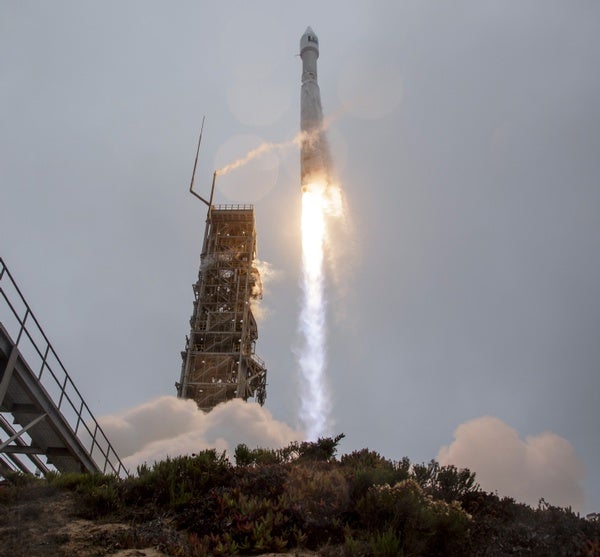
Even Rocket Launches Can't Escape COVID

Pandemic-spawned supply-chain disruptions are delaying launches and development of satellites, lunar rovers and interplanetary missions

By Irene Klotz

Space Exploration

Mars on the Cheap: Scientists Are Working to Revolutionize Access to the Red Planet

The concepts include souped-up Mars helicopters and inexpensive orbiters and landers

By Leonard David,SPACE.com

Consciousness

Death, Physics and Wishful Thinking

Fear of mortality might underlie physicists’ fondness for the anthropic principle, multiverses, superdeterminism and other shaky ideas

By John Horgan

Sponsor Content Provided by Oxford University Press

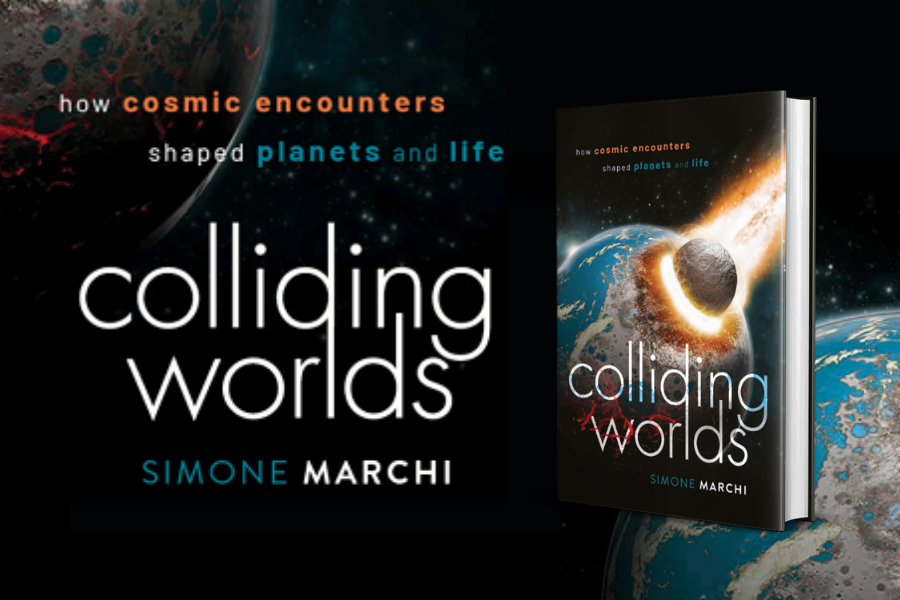
Colliding Worlds: How Cosmic Encounters Shaped Planets and Life

Simone Marchi presents the emerging story of how cosmic collisions shaped both the solar system and our own planet, from the creation of the Moon to influencing the evolution of life on Earth.

Extraterrestrial Life

How to Search for Life as We Don't Know It

Much of astrobiology is focused on looking for organisms with chemistry similar to ours—but there could well be other kinds

By Avi Loeb

Computing

An Unsung Female Pioneer of Computer Simulation

A mid-20th-century computer experiment created a new field of science—and programmer Mary Tsingou Menzel is finally being given credit for her role in making it happen

By Virginia Grant

Space Exploration

The Power of the Headline

By Andrea Gawrylewski

Engineering

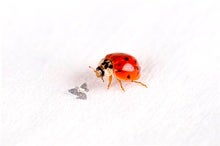
Winged Microchips Glide like Tree Seeds

The tiny sensors could gather and transmit environmental data as they drift through the air

By Nikk Ogasa
FROM THE STORE

QUOTE OF THE DAY

"When trying to imagine something we've never seen, we often default to something we have seen. For that reason, in our search for extraterrestrial life we are usually looking for life as we know it. But is there a path for expanding our imagination to life as we don't know it."

Avi Loeb, astronomer

ADVERTISEMENT

FROM THE ARCHIVE

The Cosmological Constant Is Physics' Most Embarrassing Problem

Physicists have new ideas about why the energy of empty space is so much weaker than it is predicted to be

LATEST ISSUES

Questions?   Comments?

Send Us Your Feedback
Download the Scientific American App
Download on the App Store
Download on Google Play

To view this email as a web page, go here.

You received this email because you opted-in to receive email from Scientific American.

To ensure delivery please add news@email.scientificamerican.com to your address book.

Unsubscribe     Manage Email Preferences     Privacy Policy     Contact Us

Inside Science's Weekly Newsletter

What Happened in Science this Week                            

Until last week I had no idea that our solar system is full of centaurs. These aren't the half-human, half-horse creatures from Greek myths, but a playful way to refer to the half-asteroid, half-comets that formed long ago and now roam the distant Kuiper Belt. Tom Metcalfe's story explains how studying the dullest examples of these rocky, icy objects from beyond Neptune's orbit helped researchers understand why only some shine like comets. Our other recent coverage examines a number of topics, from what physics says about the impact of a potential rule change in golf to how to age a lobster using only its DNA, and more. Please visit to Insidescience.org later this week and all next week for our coverage of the Nobel Prizes in medicine, physics and chemistry, including our predictions of the most likely winners.


Chris Gorski, Senior Editor

Our Solar System's Centaurs Are Half-Asteroid, Half-Comet

Understanding these ancient objects that sometimes produce cometlike tails may help explain how the solar system formed.


By Tom Metcalfe, Contributor

Elephants Will Cooperate to Get Food -- If There's Enough to Share

A new paper examines how elephants work together to solve a task and when cooperation breaks down.


By Katharine Gammon, Contributor

Should Golf Require Shorter Clubs?

A proposal intended to limit the length of drives by reducing the maximum club length from 48 inches to 46 inches has drawn criticism from professional players.


By Peter Gwynne, Contributor

[Video] What's a Snap Fit?

You may not know a snap fit by its name, but they're all around us from pen caps to some water bottle caps.


By Inside Science Contributor

A Lobster's Age Doesn't Show, But DNA Could Give Hints

Haley Weiss, Staff Writer


Microscopic Marvels: Flexing Tardigrades and the Snaking Filaments of a Moss Plant

Catherine Meyers, Editor


Engineers Make Flying Computer Chips the Size of Sand Grains

Charles Q. Choi, Contributor

Could The Escaped Zebras Survive Roaming Around Prince George's County Forever?

By Rachel Kurzius, DCist


Another story that surprised me this week is this one from the local online publication DCist, explaining the chances that the small dazzle of zebras that escaped a breeding operation in Upper Marlboro, Maryland, could survive in the wilds of DC's Maryland suburbs. The story interviews experts and explains a bit about how zebras live and how they might fare through the winter. The location is not that far from the headquarters of the American Institute of Physics, which publishes Inside Science. If our staff spots any of them grazing nearby, we'll be sure to share pictures.


We're Already Barreling Toward The Next Pandemic

By Ed Yong, The Atlantic


This exhaustively reported, exceptionally clear and important story by Ed Yong makes the case that when facing infectious diseases, the U.S. continues to make similar mistakes over and over, part of "a Sisyphean cycle of panic and neglect that is now spinning in its third century." This isn't easy reading, but it's important, and as with most of Yong's stories, there's a glimmer of hope herein, that the country and the world have the knowledge and the ability to do better.


Rounding Out the Story of Three Legendary Boulders

By Chris Baraniuk, Hakai Magazine


The Indigenous people from Makin Island, part of the Republic of Kiribati in the central Pacific Ocean, have long told stories about how three giant boulders came to rest near their shores. A geologist who heard about the boulders decided to investigate their geological origin -- and, well I won't spoil the story, but let's just say the two approaches come to conclusions that are pretty darn close.

Read More from Inside Science

Copyright 2021 American Institute of Physics. Inside Science syndicates its articles, columns, blogs and videos to news organizations. To initiate syndication, or request permission to republish our content (on a one-time or continuing basis), please contact Inside Science at insidescience@aip.org. News organizations seeking permission to republish Inside Science content must fully credit Inside Science as the original source of the content, include the author byline, and republish the original, unaltered form (excluding content titles, headlines, or sub-headlines). The reprint format can be seen here. Copyright conditions and usage terms are subject to change at any time without consent or any type of prior notice. To unsubscribe from all future mailings from Inside Science please click here. To manage your email subscriptions please click here.

Inside Science is an editorially independent news service of the American Institute of Physics

© 2021 American Institute of Physics

1 Physics Ellipse, College Park, MD 20740

Scientist Pankaj

Today in Science: 40 years since Challenger

The fateful failed mission is still informing NASA engineers ͏  ͏  ͏  ͏  ͏  ͏  ͏  ͏  ͏  ͏  ͏  ͏  ͏  ͏  ͏  ͏  ͏  ͏  ͏  ͏  ͏  ͏  ͏  ͏ ...