Your day one of NASA's mission to the moon ͏ ͏ ͏ ͏ ͏ ͏ ͏ ͏ ͏ ͏ ͏ ͏ ͏ ͏ ͏ ͏ ͏ ͏ ͏ ͏ ͏ ͏ ͏ ͏ ͏ ͏ ͏ ͏ ͏ ͏ ͏ ͏ ͏ ͏ ͏ ͏ ͏ ͏ ͏ ͏ ͏ ͏ ͏ ͏ ͏ ͏ ͏ ͏ ͏ ͏ ͏ ͏ ͏ ͏ ͏ ͏ ͏ ͏ ͏ ͏ ͏ ͏ ͏ ͏ ͏ ͏ ͏ ͏ ͏ ͏ ͏ ͏ ͏ ͏ ͏ ͏ ͏ ͏ ͏ ͏ ͏ ͏ ͏ ͏ ͏ ͏ ͏ ͏ ͏ ͏ ͏ ͏ ͏ ͏ ͏ ͏ ͏ ͏ ͏ ͏ ͏ ͏ ͏ ͏ ͏ ͏ ͏ ͏ ͏ ͏ ͏ ͏ ͏ ͏ ͏ ͏ ͏ ͏ ͏ ͏ ͏ ͏ ͏ ͏ ͏ ͏ ͏ ͏ ͏ ͏ ͏ ͏ ͏ ͏ ͏ ͏ ͏ ͏ ͏ ͏ ͏ ͏ ͏ ͏ ͏ ͏ ͏ ͏ ͏ ͏
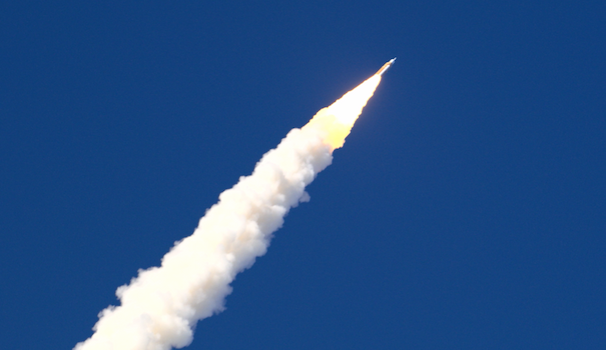
April 2, 2026—NASA's Artemis II mission launched successfully last night, and now the crew is perfecting some maneuvers in orbit to help them get to the moon. Plus, tips for building self-control, and new explanations for why black women have worse IVF outcomes. —Andrea Gawrylewski
Chief Newsletter Editor | | - NASA's Artemis II mission is officially underway. The launch occurred at 6:35 P.M. EDT last night. | 2 min read
- The astronauts were "safe" and "secure" following the launch as their spacecraft Orion entered an orbit around Earth, NASA administrator Jared Isaacman said in a press conference. | 2 min read
- So far on day one of the 10-day mission, the crew has had to troubleshoot an error light on the toilet and other software blips. They are also rehearsing some important maneuvers to help get them to the moon. | 2 min read
| | Rhesus macaque monkey. filipe_lopes/Getty Images | | | | |
Why this is interesting: These two parts of the brain's frontal lobe were long thought to operate independently. But the study showed that they can work together, further entangling brain regions' function in the production of facial expressions. This was true for both friendly facial expressions and threatening faces in the primates. The regions, however, did run at different speeds—activity in the lateral cortex changed quickly and the medial cortex was at a more leisurely pace—perhaps responding to slower-moving social cues. What the experts say: While lab-based experiments don't capture the full experience of emoting in the wild, the exploration of this question "tells us in infinitely more detail how we can investigate the neurology of facial displays," says Alan Fridlund, a social and evolutionary psychologist at the University of California, Santa Barbara, who was not involved in this study. —Emma Gometz, newsletter editor | | WEIRD METHODS: FART UNDERWEAR | | Scientists use creative—and sometimes downright bizarre—tactics to conduct their research. We highlight some here. How many times a day should a healthy person fart? To answer this question using quantitative data, scientists invented a device that could be snapped onto underwear to count every toot. The device uses chemical sensors that are sensitive to hydrogen gas, one of the two most abundant chemicals contained in farts. (The other is carbon dioxide.) It noted rapid changes in hydrogen gas concentrations, labeling each one as a discrete fart.
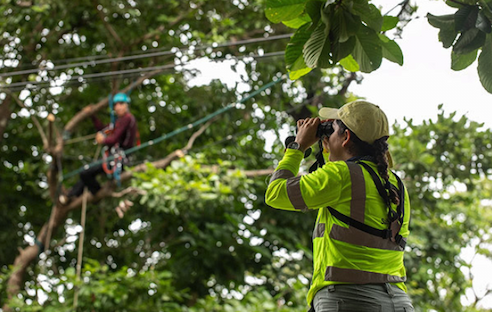
When the team tested the machine on 19 healthy adults, they found they farted about 32 times a day, although the range was very wide—between 4 and 59. The device's count was way higher than what people have self-reported in previous studies, which was about 10-20 farts per day. Maybe the "smart underwear," as it was dubbed, can help us be a little more honest about how often we need to let one rip. —EG | | In Guanacaste, Costa Rica, hundreds of golden-mantled howler monkeys (Alouatta palliata palliata) die each year after being electrocuted by power lines. "In this image, I'm teaching my colleague how best to install a camera trap to monitor howler monkeys," says primate researcher Inés Azofeifa Roja. "We can then determine where to add a canopy bridge." The rope bridges seem to be working, says Roja. "Over the past three years, our measurements have shown that monkey electrocutions have decreased by 30 percent." Nature | 3 min read | | The Artemis II mission is well under way and Scientific American will be bringing you vital updates and insights every step of the 10-day voyage. You can follow along with our coverage here. Did you watch the launch last night? I'd love to hear your reactions, thoughts, and questions about NASA's mission around the moon. Send them to newsletters@sciam.com. Thanks for reading. | | —Andrea Gawrylewski, Chief Newsletter Editor | | | | |
Subscribe to this and all of our newsletters here. | | | | |