Today Artemis II astronauts broke the 1980 record for farthest human travel from Earth ͏ ͏ ͏ ͏ ͏ ͏ ͏ ͏ ͏ ͏ ͏ ͏ ͏ ͏ ͏ ͏ ͏ ͏ ͏ ͏ ͏ ͏ ͏ ͏ ͏ ͏ ͏ ͏ ͏ ͏ ͏ ͏ ͏ ͏ ͏ ͏ ͏ ͏ ͏ ͏ ͏ ͏ ͏ ͏ ͏ ͏ ͏ ͏ ͏ ͏ ͏ ͏ ͏ ͏ ͏ ͏ ͏ ͏ ͏ ͏ ͏ ͏ ͏ ͏ ͏ ͏ ͏ ͏ ͏ ͏ ͏ ͏ ͏ ͏ ͏ ͏ ͏ ͏ ͏ ͏ ͏ ͏ ͏ ͏ ͏ ͏ ͏ ͏ ͏ ͏ ͏ ͏ ͏ ͏ ͏ ͏ ͏ ͏ ͏ ͏ ͏ ͏ ͏ ͏ ͏ ͏ ͏ ͏ ͏ ͏ ͏ ͏ ͏ ͏ ͏ ͏ ͏ ͏ ͏ ͏ ͏ ͏ ͏ ͏ ͏ ͏ ͏ ͏ ͏ ͏ ͏ ͏ ͏ ͏ ͏ ͏ ͏ ͏ ͏ ͏ ͏ ͏ ͏ ͏ ͏ ͏ ͏ ͏ ͏ ͏
April 6, 2026—An historic milestone for human exploration, really strange octopus sex and more proposed cuts to science funding. Monday, here we go.
—Andrea Gawrylewski
Chief Newsletter Editor
|
|
- The four astronauts onboard NASA’s Artemis II mission to the moon have officially traveled farther from Earth than any other human. At 1:57 P.M. EDT today, the spacecraft's crew was more than 248,655 miles (400,171 kilometers) away from Earth, breaking the previous record set in 1970 by Apollo 17. | 2 min read
- At 6:44 P.M. EDT tonight, NASA predicts the crew will lose communication with Earth for about 40 minutes as they travel behind the moon. The crew will be the farthest from Earth ever traveled by a human. | 2 min read
- The Artemis II crew will spend about six hours observing the moon today. Here’s what they’ll be looking for. | 4 min read
- What are the astronauts eating up there? On the menu: 58 tortillas, 43 cups of coffee and a lot of hot sauce. | 2 min read
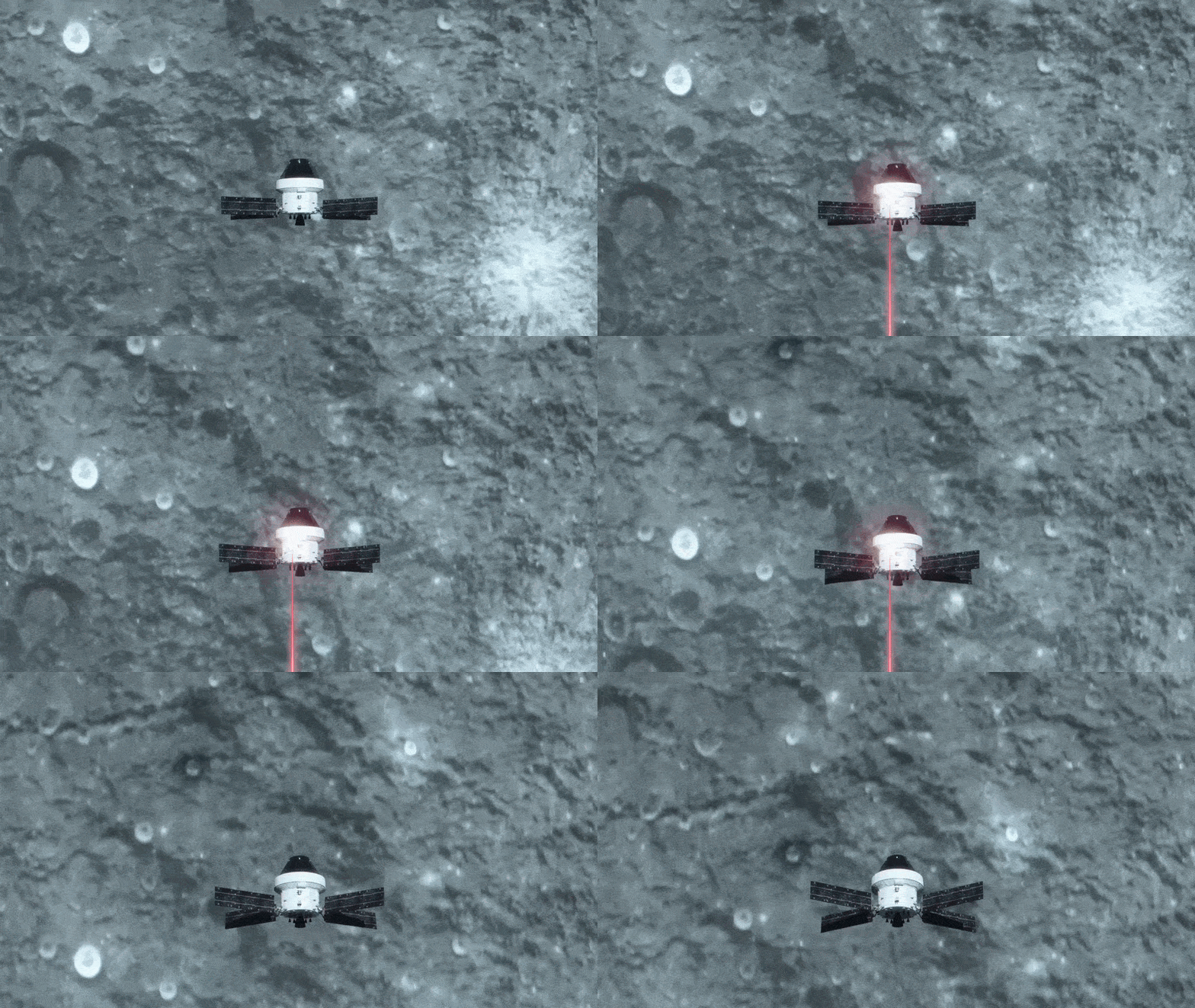
- A new laser system aboard the Orion spacecraft called O2O (short for Orion Artemis II Optical Communications System) is sending back 4K video from the mission at 260 megabits per second. Here's how it works. | 5 min read
|
|
An artist's visualization of the O2O laser communications terminal sending data over infrared light links. Dave Ryan/NASA
|
|
A new study, published in the aptly-named journal Emotion, showed that a fluffy robot can pass fear to humans by mimicking rapid breathing. Researchers designed a small robot with an automated ribcage that rose and fell like it was breathing. The team asked participants to hold it while watching a scary clip from the movie The Shining. For some participants, the robot was breathing quickly, mimicking hyperventilation, and for others it was breathing more slowly. The heart rates of people holding hyperventilating robots increased the most, compared with those holding chilled-out robots.
Why this is interesting: The study also found that participants holding steady-breathing robots had slower heart rates. The difference wasn’t statistically significant, but if one day enough evidence suggests that these robots could calm the people holding them, they could become important therapeutic tools for anxiety or other conditions, the researchers say.
What the experts say: Previous research has shown a link between a person’s emotional state and touching another friendly living thing. “There’s evidence that touching animals and humans can have calming effects,” says Eric Vanman, a psychologist at the University of Queensland in Australia who wasn’t involved with the study. —Emma Gometz, newsletter editor
|
|
|
|
|
|
SPONSORED CONTENT BY SCIENTIFIC AMERICAN
|
|
A few cabins left for Egypt cruise
|
|
Almost sold out! Experience the 2027 total solar eclipse—more than six minutes of totality—from the deck of a luxury Nile River ship on this incredible 10-day journey led by space and physics editor Clara Moskowitz.
|
|
|
|
|
|
IMAGE OF THE DAY: SPOT THE WOODCOCK
|
|
Emma Gometz; Scientific American
|
|
Can you see the sleepy American woodcock camouflaged in this picture? A group of woodcocks, likely migrating north for the summer from the southern U.S., are taking a pit stop in Bryant Park in New York City, and the local birding community is going nuts. Also known as “timberdoodles,” “bog suckers,” and “Labrador twisters,” these goofy looking shorebirds are known for their funky walk and mating displays. But when I was at the park over the weekend to snap this photo, this bird wasn’t moving much, just soaking in lots of birder attention. —EG
|
|
-
Given the following three equations, what are the values of x, y and z?
x + y = x × y × z
x + z = x × y × z
y + z = x × y × z
Click here for the solution.
|
|
- Because of funding cuts for science, the U.S. could suffer a costly departure of talented scientists from America for opportunities abroad. | The New York Times
- Fabulous interactive graphics show annual bloom times of the Washington, D.C., cherry blossoms. | D.C in Bloom
- Inside the startup company that wants to build “brainless clones” to serve the role of backup for human bodies. | MIT Technology Review
|
|
As my colleague Lee Billings wrote in this morning's round-up of Artemis II mission updates, the farther the astronauts get from Earth, the more philosophical they seem to become. NASA's Victor Glover, who is the Artemis II pilot, told CBS News over the weekend: "We’re in a spaceship really far from Earth, but you’re on a spaceship called Earth." That really struck me. The crew of the Orion is farther than any human has ever been from Earth, looking back and realizing how far Earth is from any other known life in the solar system, perhaps the nearby universe. We humans on this planet only have each other on this shared space mission.
|
|
Thanks for reading and send any suggestions on feedback on this newsletter to: newsletters@sciam.com. See you tomorrow!
—Andrea Gawrylewski, Chief Newsletter Editor
|
|
|
|
|
Subscribe to this and all of our newsletters here.
|
|
|
|
|