The halftime set referred to widespread blackouts in Puerto Rico ͏ ͏ ͏ ͏ ͏ ͏ ͏ ͏ ͏ ͏ ͏ ͏ ͏ ͏ ͏ ͏ ͏ ͏ ͏ ͏ ͏ ͏ ͏ ͏ ͏ ͏ ͏ ͏ ͏ ͏ ͏ ͏ ͏ ͏ ͏ ͏ ͏ ͏ ͏ ͏ ͏ ͏ ͏ ͏ ͏ ͏ ͏ ͏ ͏ ͏ ͏ ͏ ͏ ͏ ͏ ͏ ͏ ͏ ͏ ͏ ͏ ͏ ͏ ͏ ͏ ͏ ͏ ͏ ͏ ͏ ͏ ͏ ͏ ͏ ͏ ͏ ͏ ͏ ͏ ͏ ͏ ͏ ͏ ͏ ͏ ͏ ͏ ͏ ͏ ͏ ͏ ͏ ͏ ͏ ͏ ͏ ͏ ͏ ͏ ͏ ͏ ͏ ͏ ͏ ͏ ͏ ͏ ͏ ͏ ͏ ͏ ͏ ͏ ͏ ͏ ͏ ͏ ͏ ͏ ͏ ͏ ͏ ͏ ͏ ͏ ͏ ͏ ͏ ͏ ͏ ͏ ͏ ͏ ͏ ͏ ͏ ͏ ͏ ͏ ͏ ͏ ͏ ͏ ͏ ͏ ͏ ͏ ͏ ͏ ͏
February 9, 2026—A final run for the U.S.'s last great particle collider, the origin of the lost planet that made the moon and how the "quad god" lands impossible jumps. —Robin Lloyd, Contributing Editor | | An artist's concept of a quark-gluon plasma produced by smashing together weighty atomic nuclei at Brookhaven National Laboratory's Relativistic Heavy Ion Collider. Tiffany Bowman/Brookhaven National Laboratory | | - After 25 years, Brookhaven National Laboratory's Relativistic Heavy Ion Collider—the U.S.'s largest and only particle collider—has ceased operations. But its science lives on. | 7 min read
- Bad Bunny's Super Bowl halftime show highlighted Puerto Rico's power grid. Here's why. | 2 min read
- How does the "Quad God" keep landing harder and harder jumps? | 7 min read
- Swarms of earthquakes at Yellowstone National Park spark a boom of microbial growth in a 100-meter deep borehole, a new study finds. | 2 min read
- Mathematicians have discovered new ways to make round shapes, including a polyhedral tori with a surface made of shapes such as triangles or rectangles. | 4 min read
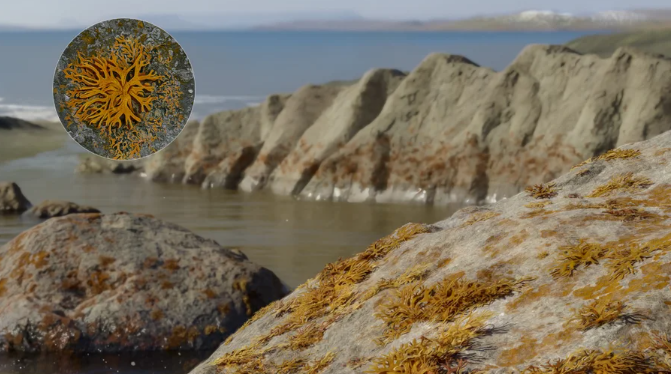
| | Roughly four and a half billion years ago, a small, lost planet named Theia collided with Earth, its wreckage eventually coalescing to form the moon. However, if the moon was really formed from an entirely different planet, why are lunar rocks so similar to Earthly ones? New insights into iron isotope ratios found in 15 terrestrial rocks and six lunar samples brought to Earth by Apollo missions have yielded an answer. Subtle differences between the isotope ratios of the lunar and terrestrial rocks show that Theia originated in the inner solar system, closer to Earth than the sun, the research team reports. Why this is interesting: The analysis also explains why Earth has slightly higher levels of molybdenum and zirconium than expected. With Theia now thought to have originated in the inner solar system, where planets are richer in heavy metals, the researchers figure that Theia's collision with Earth added some of those heavy metals to our planet's mantle. What the experts say: "I find it amazing we are still learning new things about the moon and Earth more than 50 years since the Apollo astronauts collected these rocks from the lunar surface," says planetary scientist Sara Russell, a senior research lead at the Natural History Museum, London. —Emma Gometz, newsletter editor | | A pervasive but enigmatic plant-like fossil, Spongiophyton, that thrived 410 million years ago, is actually a lichen, researchers conclude. An analysis of the underlying chemical properties of lingering organic material within the Spongiophyton fossils revealed a strong nitrogen signal. "Lichens contain fungi whose cell walls are lined with chitin," writes freelance journalist Taylor Mitchell Brown, and nitrogen is a prominent element in chitin, suggesting that Spongiophyton contained chitinous fungal cells and likely are lichens. Why this matters: If true, the finding upsets previous thinking that lichens showed up on Earth long after trees and flowers did, some 420 million years ago. In fact, Spongiophyton may have enabled many vascular plants to take root. Lichens are a symbiotic product of interactions among fungi and photosynthetic algae or cyanobacteria. They help to transform lifeless rocks and sediments into nutrient-rich soil all over the planet. What the experts say: With this revised timeline, the researchers think that Spongiophyton could have been a necessary predecessor to modern-day plant relatives. "It's a major shift in how we view the complexity of life's first steps onto land. [Spongiophyton] likely weathered rocks, stabilized sediments, cycled nutrients and contributed to the formation of protosoils just before forests developed," says paleontologist and study lead author Bruno Becker-Kerber. —Emma Gometz, newsletter editor | | Artistic reconstruction of Spongiophyton during the Early Devonian in the Paraná Basin in present-day Brazil. J. Lacerda/Bruno Becker-Kerber et al., "The rise of lichens during the colonization of terrestrial environments," in Science Advances, Vol. 11, No. 44; October 29, 2025 | | | | |
Smith has two children. At least one of them is a boy. What is the probability that the other child is a boy? Jones has two children. The older one is a girl. What is the probability that the other child is a girl? | | - Russia says 2.8-ton chunk of Aletai meteorite disguised as garden ornament found being smuggled to U.K. | CBS News
- 'All It Is Is Pain': The Olympian Testing the Limits of Endurance. | The New York Times
- Trump tried to gut science research funding. Courts and Congress have rebuffed him. | NBC News
| | During yesterday's Super Bowl, I rooted for Bad Bunny and was not disappointed. Hope you take a look at freelance science journalist Stephanie Pappas' report on why the performance featured line workers on simulated power poles. For more details on the localized power plants that Pappas's piece refers to, check out Anna Blaustein's 2022 interview with three members of the Islands Energy Program team at the Rocky Mountain Institute, a nonprofit energy research organization—about Puerto Rico's power grid and efforts to improve grid resilience. | | Please send any questions, comments or feedback on this newsletter to: newsletters@sciam.com. See you tomorrow! —Robin Lloyd, Contributing Editor
| | | | |
Subscribe to this and all of our newsletters here. | | | | |