The rocks come from a Wales quarry and a small volcanic island in Scotland ͏ ͏ ͏ ͏ ͏ ͏ ͏ ͏ ͏ ͏ ͏ ͏ ͏ ͏ ͏ ͏ ͏ ͏ ͏ ͏ ͏ ͏ ͏ ͏ ͏ ͏ ͏ ͏ ͏ ͏ ͏ ͏ ͏ ͏ ͏ ͏ ͏ ͏ ͏ ͏ ͏ ͏ ͏ ͏ ͏ ͏ ͏ ͏ ͏ ͏ ͏ ͏ ͏ ͏ ͏ ͏ ͏ ͏ ͏ ͏ ͏ ͏ ͏ ͏ ͏ ͏ ͏ ͏ ͏ ͏ ͏ ͏ ͏ ͏ ͏ ͏ ͏ ͏ ͏ ͏ ͏ ͏ ͏ ͏ ͏ ͏ ͏ ͏ ͏ ͏ ͏ ͏ ͏ ͏ ͏ ͏ ͏ ͏ ͏ ͏ ͏ ͏ ͏ ͏ ͏ ͏ ͏ ͏ ͏ ͏ ͏ ͏ ͏ ͏ ͏ ͏ ͏ ͏ ͏ ͏ ͏ ͏ ͏ ͏ ͏ ͏ ͏ ͏ ͏ ͏ ͏ ͏ ͏ ͏ ͏ ͏ ͏ ͏ ͏ ͏ ͏ ͏ ͏ ͏ ͏ ͏ ͏ ͏ ͏ ͏
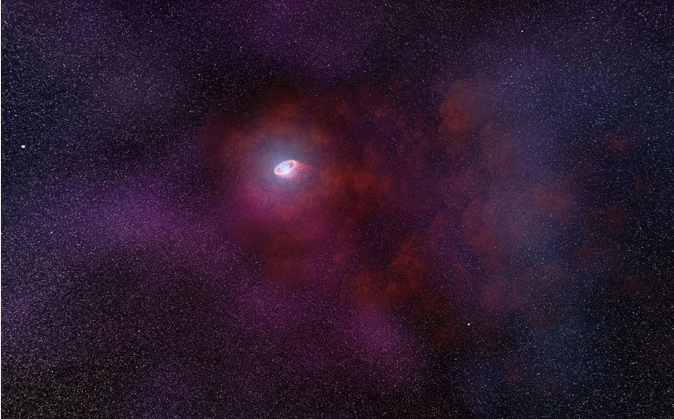
February 10, 2026—Auroral arcs, the geology of curling stones and why this winter has been extra cold in the Eastern U.S. —Robin Lloyd, Contributing Editor | | An illustration of a pulsar wind nebula produced by the interaction of the outflow particles from a neutron star with gaseous material in the interstellar medium that the neutron star is plowing through. NASA/ESA/N. Tr'Ehnl/Pennsylvania State University | | - A pulsar may have been discovered at the Milky Way's heart. If confirmed, the result could reveal more precise measurements of the space-time around our galaxy's central supermassive black hole. | 1 min read
- AI might have worked out the rules of a mysterious ancient Roman stone board game. It has been unplayable since its discovery more than a century ago. | 3 min read
- Humans might have been sailing the sea between Greenland and Canada as long as it's been unfrozen, shaping Arctic ecosystems, archaeological evidence suggests. | 2 min read
- People with obesity have higher rates of mortality and hospitalization from a variety of infections from viruses, fungi, parasites and bacteria. | 4 min read
-
The stunning wave patterns of auroras that show through the night sky near Earth's poles can follow patterns known as arcs, a new study concludes. | 1 min read . | 1 min read
- For discussion: Curling perhaps seems more nuanced and calm compared with some of the other winter Olympic sports. But for those who play as well as those who are enthusiastic spectators, the sport is riveting. If you're one of those folks or newly absorbed in the Olympic curling events, what would you say is most engaging about the sport? Post your comments by reading our article on curling stone geology (also blurbed below), scrolling down to the tan box and clicking "Join the Discussion."
| | Temperatures in the eastern U.S. reached the negative teens and low twenties Fahrenheit (negative mid-20s to negative low 30s Celsius) last weekend, completing another brutal stretch of freezing weather in the area. For Northeasterners under 30 years old (like myself), this may be the coldest winter we've ever experienced. A weakening of a so-called polar vortex, which you can liken in this case to a circular rushing river of wind corralling the bitterest cold air in the Arctic, is driving this frigid phase, climate scientist David Swain tells Scientific American's Andrea Thompson.
How it works: A polar vortex typically circulates cold air at Earth's poles. But when it weakens, the circle of cold air can bend southward, blanketing the area it covers in Arctic temperatures. In the case of the U.S., because of the location of the Rockies as well as the boundary between the Pacific Ocean and the land, the polar vortex is more likely to bend and carry cold air over the eastern part of the country.
What can be done: With the average annual temperature at Earth's poles steadily rising because of climate change, the Arctic isn't as cold as it once was. So although this frigid weather feels unusual, it only feels so relative to the more recent warmer winters in the eastern U.S. "That source of bitterly cold air isn't as bitterly cold as it used to be," says Swain.
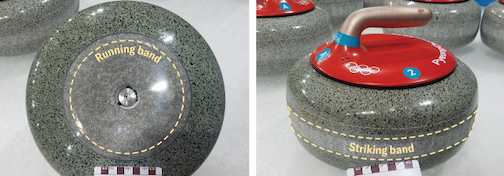
—Emma Gometz, newsletter editor | | | Geology of Curling Stones | The stone used in curling rocks, including those used in the Olympics, come from either a remote volcanic island in Scotland called Ailsa Craig or the Trefor granite quarry in Wales, reports Scientific American's Andrea Thompson. The granitoid rocks at both sources are relatively young, says mineralogist and curler Derek Leong of the University of Regina in Saskatchewan. The Wales stone formed 400 million to 500 million years ago during a mountain-building event, whereas the Scotland rocks formed around 60 million years ago during rifting that yielded the Atlantic Ocean. How it works: Each heavy, polished stone costs about $600 but it lasts for at least half a century. The main body of the rock includes its "striking surface," where the stone's sides could make contact with other stones when a player tries to knock or remove stones from play. So you want a rock with larger grains that's less vulnerable to chipping and collision damage, Leung says, such as Ailsa Craig common green, blue Trefor and red Trefor. However, a circular disk of Ailsa Craig blue hone is inserted in the bottom of the main rock for an optimal "running surface." The blue hone's smaller, more uniform grains create a smoother, tougher surface for sliding on the ice sheet. What the experts say: "Having a young rock [for curling stones] is probably a good thing because it means that it's less likely to have incurred stresses related to different tectonic events" before it is subjected to the frictional, thermal and impact stresses of curling, Leung says. | | | | |
- Unscramble this puzzle of the July 1973 cover of Scientific American. The reassembled picture shows a painting of a part of the tubing of a French horn. This art is associated with the issue's feature, "The physics of brasses," by Arthur H. Benade, of Case Western Reserve University.
| | My household got hooked on Olympic curling several years ago, in part due to an NBC-TV ad promoting coverage of the U.S.'s success to date in the competition, during which a voice-over boomed: "Not in our house! Not tonight!" The catch-phrase remains popular today in conversations between spouse Steve Mirsky and me. For a scientific angle on curling that isn't geological, check out Steve's classic podcast episode featuring an interview with a quantum tunneling researcher who also looks into the physics of curling. | | We always like to hear from you. Please send any comments or feedback to: newsletters@sciam.com. See you tomorrow! —Robin Lloyd, Contributing Editor
| | | | |
Subscribe to this and all of our newsletters here. | | | | |