December 22, 2025—A distorted mind-body connection might explain some mental illnesses. Plus, these are the best countries in the world for walking or bicycling, and OpenAI and Disney partner up. —Andrea Gawrylewski, Chief Newsletter Editor | | NASA's Perseverance rover snapped this selfie in May 2025 on the surface of Mars. NASA/JPL-Caltech/MSSS | | A distorted ability to connect with our own heartbeat, breathing and other inner signals may underlie anxiety, eating disorders, PTSD, personality disorders and other common mental illnesses, writes freelance journalist Diana Kwon. An emerging body of research suggests that one's ability to sense these inner signals, called interoception, could affect mental health profoundly. For instance, people with anorexia nervosa might over-rely on external signals, such as how they look in the mirror, at the expense of hunger and other internal signals. Overall, the approach takes seriously the mind-body connection. Sensory-deprivation chambers, aka float tanks, are among the treatments being examined, as they boost one's ability to sense internal signals.
How it works: Many studies on interoception have focused on the heart. The brain steadily attempts to decode the cause of internal sensations, like heart rate. If a person's brain incorrectly interprets heart rate, it could lead to negative psychological effects. If they erroneously feel their heart rate is elevated, for example, they may become anxious even in the absence of a threat. One review of many studies on interoception found that people with a range of psychiatric disorders, including anxiety disorders and schizophrenia, shared similar alterations in the insula, a key brain region linked with interoception during body-sensing-related tasks. Overall, though, results have been mixed.
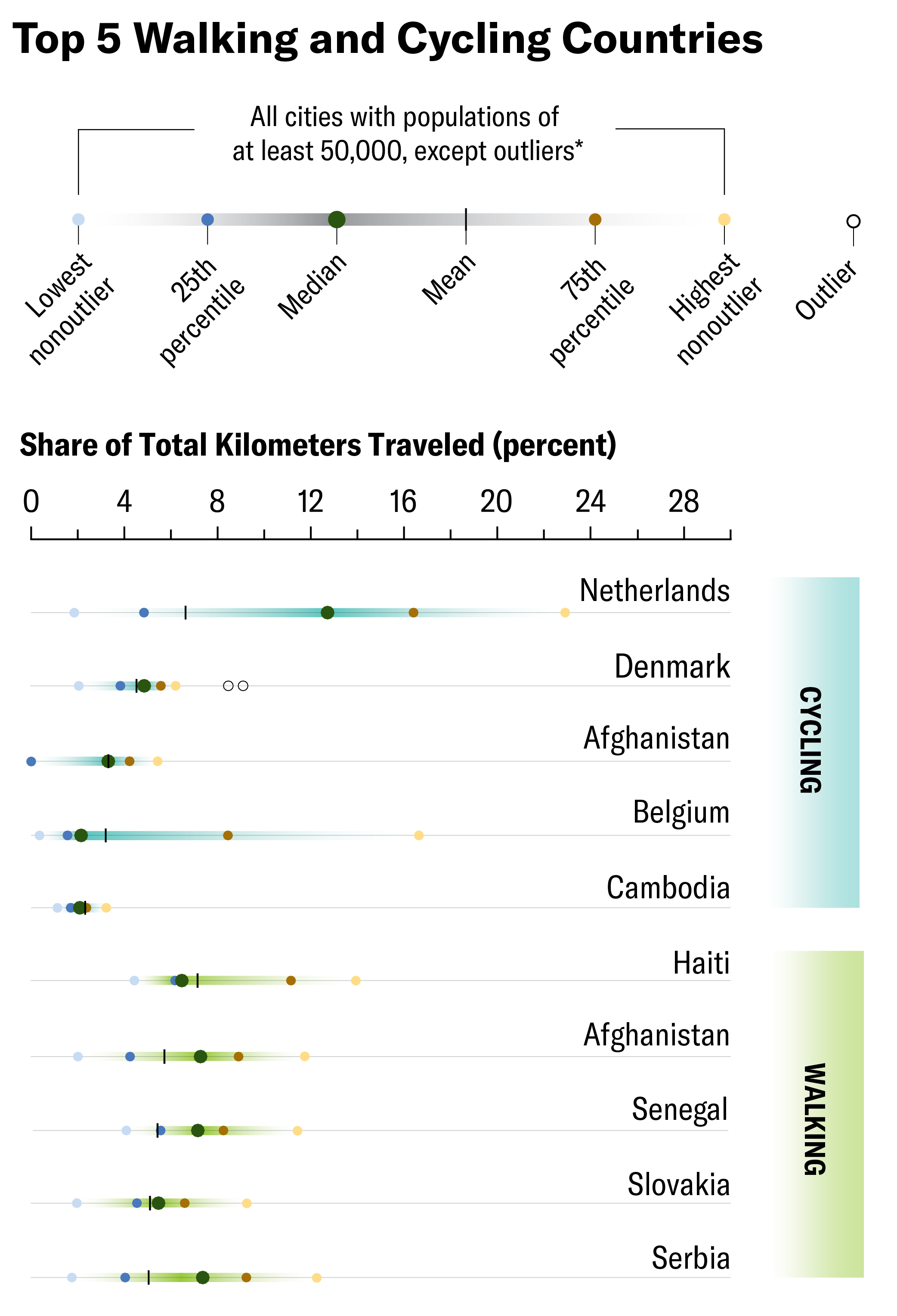
What the experts say: The role of interoception could grow more clear with studies of interventions targeting disturbances in this ability, particularly, with more quantitative studies or ones that combine behavioral data with measurements of brain activity. "To understand what interoception is, we need to manipulate it. And to understand its role as a biomarker, as something that is related to mental health, we also need to manipulate it," Micah Allen, a neuroscientist at Aarhus University. —Robin Lloyd, contributing editor | | The details: A high variation of walking and cycling rates within each country exist, likely reflecting local policy choices and infrastructure. Higher gas prices also increase walking and cycling rates. Interestingly, hilly cities do deter biking, but rainy or windy climates don't seem to stop people from getting out there. | | Eve Lu; Source: "Global Health and Climate Benefits from Walking and Cycling Infrastructure," by Adam Millard Ball et al., in PNAS USA, Vol. 122; June 9, 2025 (data) | | Why this matters: A car-free lifestyle can have broad perks. The researchers estimate that if every city had a bike network as extensive as Copenhagen's, private vehicle emissions would fall 6 percent, and annual health benefits would total $435 billion, partly because of reduced cardiovascular disease.
What the experts say: Walking can be a necessity rather than a choice. Poverty likely drives high walking rates in countries such as Haiti, says Carole Turley Voulgaris, an urban planning researcher at Harvard University, who was not involved in the study. Car ownership provides an economic boost to low-income households. —Andrea Tamayo, newsletter writer | | | | |