Fire was a milestone for our species ͏ ͏ ͏ ͏ ͏ ͏ ͏ ͏ ͏ ͏ ͏ ͏ ͏ ͏ ͏ ͏ ͏ ͏ ͏ ͏ ͏ ͏ ͏ ͏ ͏ ͏ ͏ ͏ ͏ ͏ ͏ ͏ ͏ ͏ ͏ ͏ ͏ ͏ ͏ ͏ ͏ ͏ ͏ ͏ ͏ ͏ ͏ ͏ ͏ ͏ ͏ ͏ ͏ ͏ ͏ ͏ ͏ ͏ ͏ ͏ ͏ ͏ ͏ ͏ ͏ ͏ ͏ ͏ ͏ ͏ ͏ ͏ ͏ ͏ ͏ ͏ ͏ ͏ ͏ ͏ ͏ ͏ ͏ ͏ ͏ ͏ ͏ ͏ ͏ ͏ ͏ ͏ ͏ ͏ ͏ ͏ ͏ ͏ ͏ ͏ ͏ ͏ ͏ ͏ ͏ ͏ ͏ ͏ ͏ ͏ ͏ ͏ ͏ ͏ ͏ ͏ ͏ ͏ ͏ ͏ ͏ ͏ ͏ ͏ ͏ ͏ ͏ ͏ ͏ ͏ ͏ ͏ ͏ ͏ ͏ ͏ ͏ ͏ ͏ ͏ ͏ ͏ ͏ ͏ ͏ ͏ ͏ ͏ ͏ ͏
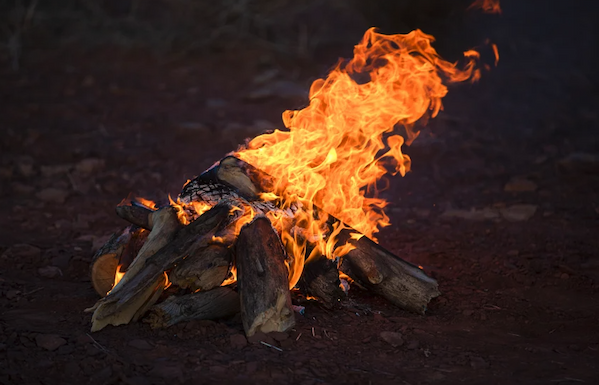
December 10, 2025—Human use of fire began much earlier than experts long thought. Plus, an exoplanet is defying the rules of physics, and some dogs can learn words the same way toddlers do. —Andrea Gawrylewski, Chief Newsletter Editor | | - Ancient humans were making fire 350,000 years earlier than previously thought, a new study finds. | 3 min read
- FDA officials are newly scrutinizing several approved therapies to treat RSV in babies, despite the fact that these shots were shown to be safe in clinical trials. | 2 min read
- Astronomers have spotted the oldest known supernova, dating back to when the universe was less than a billion years old. | 2 min read
- A deadly coronavirus called MERS has resurfaced in France. Health officials are racing to trace everyone who came into contact with two men with the disease. | 1 min read
- NASA expected to hear from its Mars orbiter MAVEN on December 6. As the craft emerged from the far side of the Red Planet, the agency did not detect its signal. | 2 min read
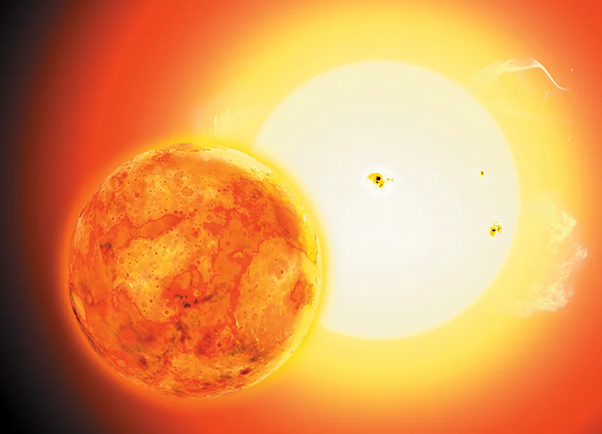
| | Supporting our work means amplifying science. Consider a subscription to Scientific American and back independent science journalism! Plus, we've got some great holiday deals right now. | | Artist's visualization of exoplanet TOI-561 b and its star. Ron Miller | | In theory, exoplanet TOI-561 b is too hot, too small and too old to have air, but astronomers have discovered an atmosphere on the lava planet. TOI-561 b orbits very close to its star—so one side is baked in ceaseless radiation, while the other is always dark. Using JWST observations, the research team measured TOI-561 b's temperature and found the light-soaked dayside was cooler than they would expect for an atmosphere-less rock, suggesting a gas is present to spread heat around the planet.
Why this is interesting: In our solar system, bigger, cooler planets tend to hold on to air, while smaller, hotter planets don't. But TOI-561 b is small (about two Earth masses) and very, very hot, with a rock-melting temperature of 2300 kelvins. Scientists also think the planet is twice as old as our solar system, which should have given radiation from its star plenty of time to blast away its atmosphere.
What experts say: "It is definitely surprising and exciting to find a substantial atmosphere on this hot, rocky planet," says planetary scientist Joshua Krissansen-Totton of the University of Washington, who wasn't involved in the study. —Andrea Tamayo, Newsletter Writer | | Some dogs have relatively large vocabularies—as anyone who must spell out the words "treat" and "walk" in front of their dogs can attest. But some dogs can go a step further and associate familiar words with new objects that share similar functions. In a new study, owners of 10 dogs, mostly border collies, taught their pets words for objects in two categories: toys they could tug were called "pulls;" and toys they could fetch were called "throws." After four weeks of training, the dogs played with new toys that shared these same functions over the course of a week. When owners asked their dog to fetch a "throw" or a "pull" toy, seven of the 10 dogs chose the right toy about two-thirds of the time. Why this is interesting: By 14 months, many human babies apply role or function to new words to extend their vocabularies. This canine parallel could offer scientists unique possibilities to explore how language-related abilities might have evolved—and how they can emerge in a nonlinguistic species, says Claudia Fugazza, the study's lead author and an ethologist at Eötvös Loránd University in Hungary.
What the experts say: Fugazza emphasizes that these animals are exceptional; most family dogs never build such vocabularies. She says she was surprised by the dogs' ease and flexibility in applying words by function, akin to how human children begin extending their vocabularies through everyday exposure. —Andrea Tamayo, Newsletter Writer | | | | |
SPONSORED CONTENT BY CALIFORNIA CORRECTIONAL HEALTH CARE SERVICES (CCHCS) | | Here, you'll find diverse clinical teams and a welcoming environment in which you're free to be yourself.
| | | | |
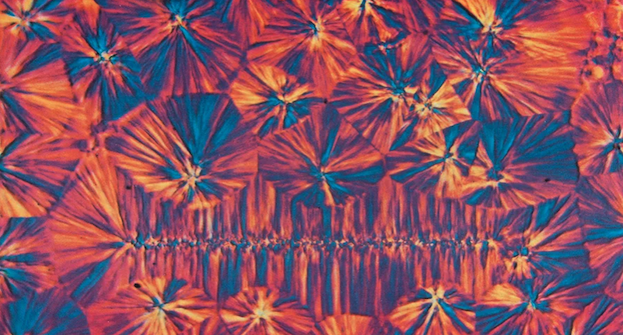
Scientific American, Vol. 233, No. 6; December 1975 | | - From the December 1975 issue: Typical microstructure features observed in semicrystalline polymers can be seen in this photomicrograph of a thin film of polypropylene. The "sunburst" structures are called spherulites; their boundaries would be circular if they did not encounter neighboring crystallites as they grow outward from a core. The photomicrograph was made by David Hamer at the Celanese Research Company.
| | - Cuts to NIH grants shut out hundreds of early career scientists from starting their own labs. | STAT
- A new hypothesis to explain why ice is slippery. | Quanta
- A sperm donor with a rare cancer-causing genetic mutation fathered nearly 200 people in Europe. | Ars Technica
| | Studies on dog vocabulary make me smile. Even if most of us won't be teaching our dogs "pulls" and "throws," there's wonder in finding even a tiny bit of shared language. We're forever trying to speak dog (and cat and hamster?), hoping for that moment of real understanding. And when it happens, even briefly, it feels like joy. | | How do you and your pets communicate? Let me know and send other newsletter feedback to: newsletters@sciam.com. Until tomorrow. —Andrea Gawrylewski, Chief Newsletter Editor
| | | | |
Subscribe to this and all of our newsletters here. | | | | |