Wednesday, May 31, 2023

Climate change is making inflation worse

Trouble viewing? View in your browser.
View all Scientific American publications.
    
May 30, 2023

Climate Change

Climate Change Is Exacerbating Inflation Worldwide

Rising temperatures could increase global inflation by as much as 1 percent every year until 2035

By Avery Ellfeldt,E&E News

Neuroscience

The Kavli Prize Presents: Understanding the Machinery of the Cell [Sponsored]

James Rothman shared The Kavli Prize in Neuroscience in 2010 for discovering the molecular basis of neurotransmitter release. How did a biochemist come to win such a prestigious prize in neuroscience?

By Scientific American Custom Media | 09:25

Biotech

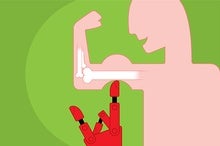
Bionic Finger 'Sees' Inside Objects by Poking Them

A robotic finger’s supersensitive touches could probe inside body parts and circuits

By Simon Makin

Planetary Science

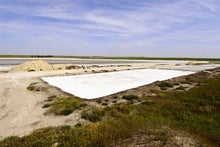
Dried-Up Lagoon Is 'Time Analog' for Martian Life

If Martian microbes were like those in this Earth lagoon, they could have survived the Red Planet’s primordial desiccation

By Allison Gasparini

Intelligence

The Dunning-Kruger Effect Isn't What You Think It Is

The least skilled people know how much they don't know, but everyone thinks they are better than average

By Eric C. Gaze,The Conversation US

Mathematics

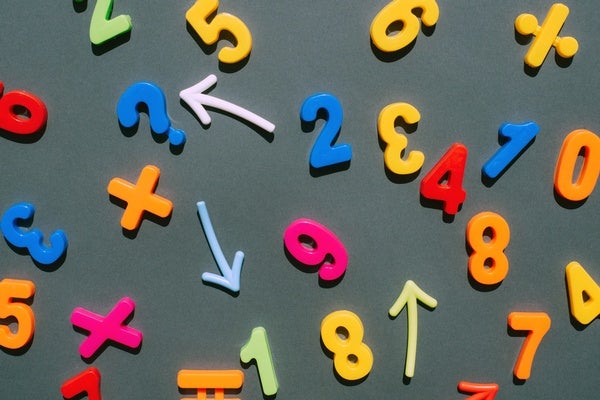
These Are the Most Bizarre Numbers in the Universe

Most real numbers are unknown—even to mathematicians

By Manon Bischoff
FROM THE STORE
FROM THE ARCHIVE

GDP Is the Wrong Tool for Measuring What Matters

It’s time to replace gross domestic product with real metrics of well-being and sustainability

WHAT WE'RE READING

Meet the Roving Veterinarians Caring for Mexico's Rural Horses

Horses, donkeys and mules can be a lifeline for families living in the countryside, but there haven’t always been vets around to treat them.

By Emiliano Rodríguez Mega | The New York Times | May 9, 2023

LATEST ISSUES

Questions?   Comments?

Send Us Your Feedback
Download the Scientific American App
Download on the App Store
Download on Google Play

To view this email as a web page, go here.

You received this email because you opted-in to receive email from Scientific American.

To ensure delivery please add news@email.scientificamerican.com to your address book.

Unsubscribe     Manage Email Preferences     Privacy Policy     Contact Us

You Can Probably Beat ChatGPT at These Math Brainteasers. Here's Why

Trouble viewing? View in your browser.
View all Scientific American publications.
    
May 30, 2023

Over the past several months, we have written a lot about the impressive abilities of language-generating AI programs like ChatGPT. But those abilities have their limits. In this week's lead article, Scientific American news reporter Meghan Bartels stumped ChatGPT with brain teasers by, or inspired by the work of, legendary math puzzler Martin Gardner. Then she consulted AI experts to find out why the program kept getting the wrong answers—and what its failures tell us about the limitations of large language models.

Sophie Bushwick, Associate Editor, Technology

Artificial Intelligence

You Can Probably Beat ChatGPT at These Math Brainteasers. Here's Why

The ChatGPT AI can ace an IQ test, but it can’t beat brainteasers like those devised by legendary math puzzler Martin Gardner

By Meghan Bartels

Mental Health

Social Media Can Harm Kids. Could New Regulations Help?

As more researchers document the potential harms of social media use, especially for youngsters, both Republicans and Democrats are pushing legislation to rein in platforms

By Jesse Greenspan

Biotech

Brain-Spine Interface Allows Paralyzed Man to Walk Using His Thoughts

A device provides a connection between the brain and spinal cord, allowing thought to control movement

By Dyani Lewis,Nature magazine

Artificial Intelligence

Here's Why AI May Be Extremely Dangerous--Whether It's Conscious or Not

Artificial intelligence algorithms will soon reach a point of rapid self-improvement that threatens our ability to control them and poses great potential risk to humanity

By Tamlyn Hunt

Computing

People, Not Google's Algorithm, Create Their Own Partisan 'Bubbles' Online

Politically polarized Google users are not steered to partisan sites by the search engine’s algorithm but generally decide to go there on their own

By Joanna Thompson

Artificial Intelligence

A Computer Scientist Breaks Down Generative AI's Hefty Carbon Footprint

Is generative AI bad for the environment? A computer scientist explains the carbon footprint of ChatGPT and its cousins—and how to reduce it

By Kate Saenko,The Conversation US

Robotics

Soft 'Electronic Skin' Mimics Our Sense of Touch

A flexible, conductive membrane that can pass sensory information to the brain and muscles is a step towards artificial skin

By Katharine Sanderson,Nature magazine

Artificial Intelligence

Why We Need to See Inside AI's Black Box

A computer scientist explains what it means when the inner workings of AIs are hidden

By Saurabh Bagchi,The Conversation US

Biotech

Bionic Finger 'Sees' Inside Objects by Poking Them

A robotic finger’s supersensitive touches could probe inside body parts and circuits

By Simon Makin
FROM THE STORE

QUOTE OF THE DAY

"The complaints, which were reported across the US, Europe, and Asia, span from 2015 to March 2022. During this period, Handelsblatt says Tesla customers reported over 2,400 self-acceleration issues and 1,500 braking problems, including 139 reports of 'unintentional emergency braking' and 383 reports of 'phantom stops' from false collision warnings."

Emma Roth, The Verge

FROM THE ARCHIVE

The Mathematical Surprises of Triangles, Squares and Pentagons

On his 101st birthday, Martin Gardner's legacy continues to inspire new breakthroughs

LATEST ISSUES

Questions?   Comments?

Send Us Your Feedback
Download the Scientific American App
Download on the App Store
Download on Google Play

To view this email as a web page, go here.

You received this email because you opted-in to receive email from Scientific American.

To ensure delivery please add news@email.scientificamerican.com to your address book.

Unsubscribe     Manage Email Preferences     Privacy Policy     Contact Us

Scientist Pankaj

U.S. loses its measles elimination status

Eliminating measles 26 years ago was a public health victory ͏  ͏  ͏  ͏  ͏  ͏  ͏  ͏  ͏  ͏  ͏  ͏  ͏  ͏  ͏  ͏  ͏  ͏  ͏  ͏  ͏  ͏  ͏  ͏  ͏  ͏  ͏...