Tuesday, September 3, 2024

Tech: Cyborg worms guided by AI

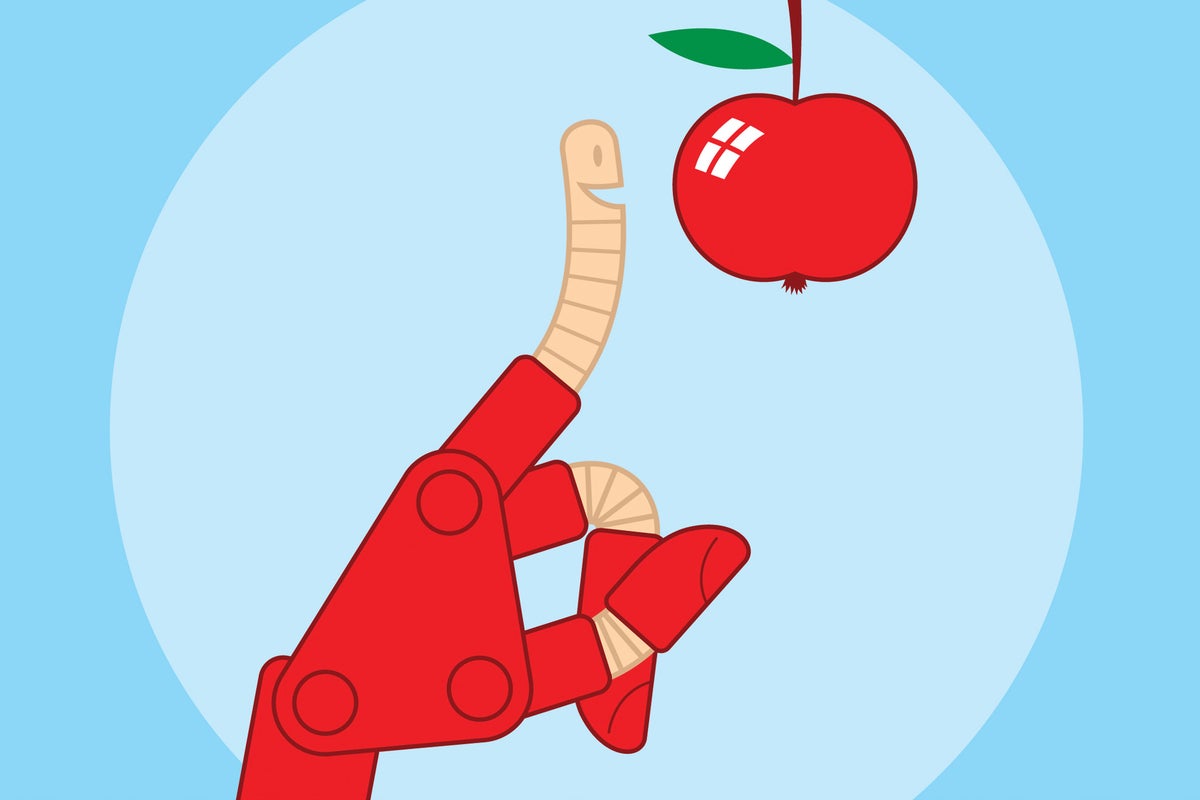
September 3—This week, scientists integrated AI into worm nervous systems, even the most powerful telescopes struggle to capture details on the moon, and the case for regulation that promotes upgraded school ventilation. All that and more below!

—Ben Guarino, Associate Editor, Technology


The Federal Trade Commission is studying how companies use consumer data to charge different prices for the same product

The Federal Trade Commission is investigating an emerging business practice that the agency calls "surveillance pricing." By analyzing user behavior and demographic data, AI systems may tailor prices to individual consumers. Eight companies (none of which have been accused of anything illegal) have been ordered to explain to the FTC how algorithmic price adjustments might affect shoppers. Those companies "have publicly touted their use of AI and machine learning to engage in data-driven targeting," FTC chief technologist Stephanie Nguyen tells freelance journalist Webb Wright.

Why it matters:
Personalized pricing, as applied to in-person transactions such as car purchases, is an old custom. But when performed by algorithms in the course of online shopping, the process is less obvious and perhaps more intrusive. University of Chicago marketing professor Jean-Pierre Dubé says prices could be personalized along "dimensions that aren't acceptable" if companies use consumer information that hasn't been knowingly shared.

What's next:
Mastercard, JPMorgan Chase, e-commerce platform Bloomreach, consulting firms Accenture and McKinsey & Company, and software companies Revionics, TASK Software and PROS were ordered to submit reports describing their use of surveillance pricing to the FTC this week. The FTC's Nguyen says those reports will "bring more information about this practice to light." --Ben Guarino

In Other News
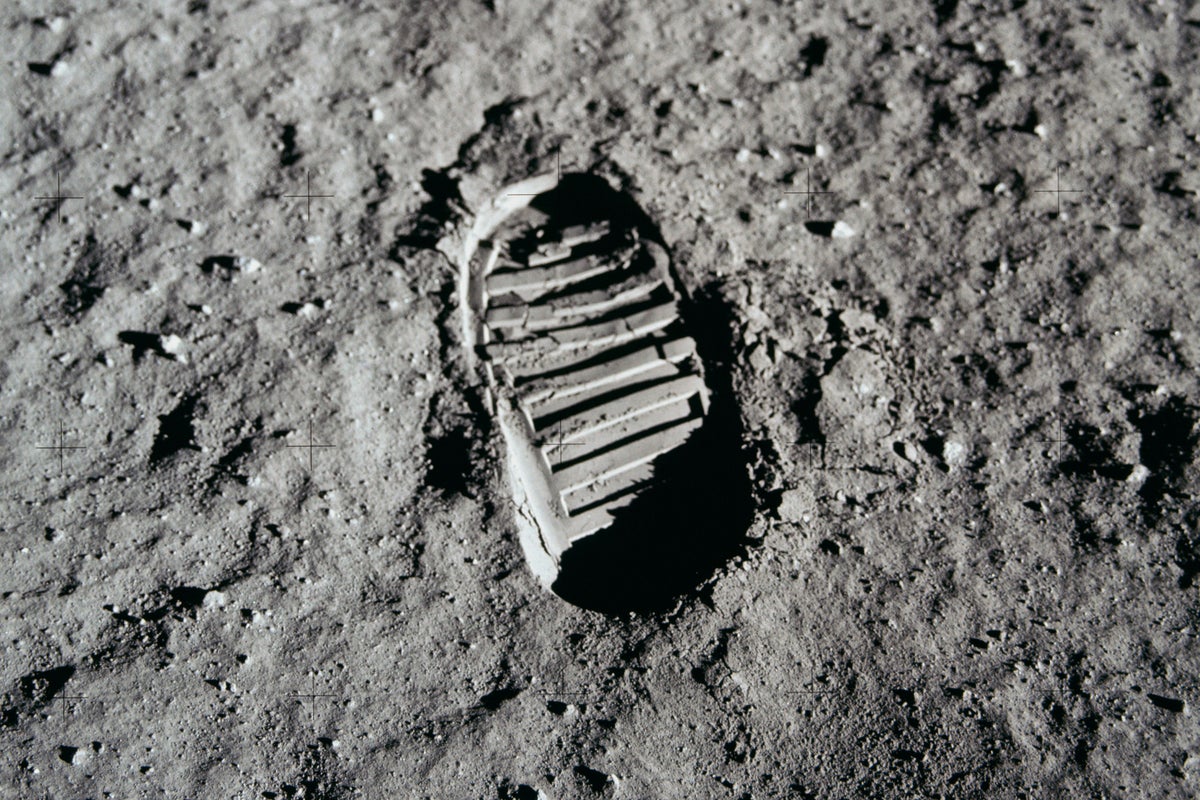
Can a Telescope See Astronauts' Boot Prints on the Moon?

Even Earth's mightiest telescopes aren't up to the task of imaging Apollo lunar landing sites. A lack of resolution is the biggest reason why

Kids Are Headed Back to School. Are They Breathing Clean Air?

Clean indoor air protects against diseases such as COVID and flu, but we're not doing enough to ensure it

Expert Perspectives

As the new school year starts, AI tools are more widespread than ever. What should educators do? Some professors and experts make the case for allowing students to embrace—responsibly—large language models such as ChatGPT.

From the Archive
How Indigenous Groups Are Leading the Way on Data Privacy

Indigenous groups are developing data storage technology that gives users privacy and control. Could their work influence those fighting back against invasive apps?

How do you like today's newsletter? Let us know by emailing newsletters@sciam.com. We love hearing from you!

Monday, September 2, 2024

The Two Mathematical Perspectives on Shape

Math and Science News from Quanta Magazine
View this email in your browser
Each week Quanta Magazine explains one of the most important ideas driving modern research. This week, math staff writer Joseph Howlett delves into the interplay of two related but distinct fields — geometry and topology. 


The Two Mathematical Perspectives on Shape

By JOSEPH HOWLETT

Geometry — the study of shapes — is a staple of every math curriculum. But there is another field of mathematics concerned with shapes, albeit from a very different perspective. Mathematicians use this field, called topology, alongside geometry to probe spaces that defy the imagination.

Geometry involves quantifying properties of fixed shapes: length, angle, volume and more. An object under a geometer's lens is rigid like a gemstone — it can be moved about but not warped. Topologists, on the other hand, can stretch and compress the shapes they study like clay. They see no difference between a sphere and a cube, because one can easily be molded into the other without breaking or tearing.

Topologists care instead about holes — how many a shape has — and how the shape is wound around itself. A doughnut and a coffee mug both have one hole that prevents them from being shrunk to a point, so they are topologically the same. But they're different from a sphere or a handle-less coffee cup, which have no holes. Similarly, two knots — formed when shapes are twisted in higher dimensions — are topologically the same if one can be tangled or untangled into the other. They're different if you can only achieve this by cutting or gluing. All kinds of surfaces, as well as their higher-dimensional relatives called manifolds, have intriguing geometric and topological properties that mathematicians want to make sense of.

To understand the world around us — from the shape of a data set to the shape of our universe — mathematicians are constantly testing the limits of their geometric and topological toolkits.

What's New and Noteworthy
Often, topologists try to avoid geometry altogether, as when Leonhard Euler proved in 1736 that you can't traverse the whole city of Königsberg without crossing the same bridge twice. He realized that this problem was really about the path's topology, not its geometry, in what is now considered the earliest landmark finding in the field.

Since then, mathematicians have used topological methods to solve many problems in geometry. That was the case in a 2020 proof establishing that every smooth, closed curve contains a rectangle. The following year, Quanta reported on the development of sophisticated topological approaches and their application to questions surrounding the geometry of orbiting objects. And last year, Richard Schwartz of Brown University brought in techniques from topology to find geometrically "optimal" shapes, such as the thickest rectangle you can possibly use to make a Möbius strip. In doing so, he verified a conjecture that dates back to the 1970s.

Sometimes the reverse can happen, where understanding the geometry of a shape can give important insights into its topology. It's long been known, for instance, that local geometric properties such as the so-called curvature of a shape constrain what it can look like topologically. Say that all you know about a given two-dimensional surface is that it's positively curved at every point. Then it can only be the surface of a sphere or one other, more complicated shape. And geometric curvature data is enough to tell you this.
This year, Quanta wrote about another example of the role curvature plays in determining topology. It turns out that local geometric measurements can even give hints about the topology of the entire universe.

Geometry has plenty of other applications where topology can't help. This is true any time the objects in question must be rigid, like when you're packing shapes as tightly as possible, or when distances are critical, like when you're trying to construct different-size triangles inside a square. But over the last century, it's really been the relatively nascent field of topology that has helped to broaden its more ancient cousin's horizons.

AROUND THE WEB

The Royal Swedish Academy of Sciences published a great summary of how the recipients of the 2016 Nobel Prize in Physics used topology in their breakthroughs on phase transitions.

3Blue1Brown has a video that visually explains the topology-based proof of the "inscribed rectangle" problem.

Science News recently ran a story about how the topology of our universe is still up for grabs, and what Pac-Man might be able to tell us about its shape.

Follow Quanta
Facebook
Twitter
YouTube
Instagram
Simons Foundation

160 5th Avenue, 7th Floor
New York, NY 10010

Copyright © 2024 Quanta Magazine, an editorially independent division of Simons Foundation

Scientist Pankaj

U.S. loses its measles elimination status

Eliminating measles 26 years ago was a public health victory ͏  ͏  ͏  ͏  ͏  ͏  ͏  ͏  ͏  ͏  ͏  ͏  ͏  ͏  ͏  ͏  ͏  ͏  ͏  ͏  ͏  ͏  ͏  ͏  ͏  ͏  ͏...