Plus, humans and animals prefer the same mating calls. ͏ ͏ ͏ ͏ ͏ ͏ ͏ ͏ ͏ ͏ ͏ ͏ ͏ ͏ ͏ ͏ ͏ ͏ ͏ ͏ ͏ ͏ ͏ ͏ ͏ ͏ ͏ ͏ ͏ ͏ ͏ ͏ ͏ ͏ ͏ ͏ ͏ ͏ ͏ ͏ ͏ ͏ ͏ ͏ ͏ ͏ ͏ ͏ ͏ ͏ ͏ ͏ ͏ ͏ ͏ ͏ ͏ ͏ ͏ ͏ ͏ ͏ ͏ ͏ ͏ ͏ ͏ ͏ ͏ ͏ ͏ ͏ ͏ ͏ ͏ ͏ ͏ ͏ ͏ ͏ ͏ ͏ ͏ ͏ ͏ ͏ ͏ ͏ ͏ ͏ ͏ ͏ ͏ ͏ ͏ ͏ ͏ ͏ ͏ ͏ ͏ ͏ ͏ ͏ ͏ ͏ ͏ ͏ ͏ ͏ ͏ ͏ ͏ ͏ ͏ ͏ ͏ ͏ ͏ ͏ ͏ ͏ ͏ ͏ ͏ ͏ ͏ ͏ ͏ ͏ ͏ ͏ ͏ ͏ ͏ ͏ ͏ ͏ ͏ ͏ ͏ ͏ ͏ ͏ ͏ ͏ ͏ ͏ ͏ ͏
March 20, 2026—An influential vaccine advisory panel may be disbanded, a much-anticipated sci-fi movie is in theaters and readers give advice on avoiding microplastics. —Emma Gometz, Newsletter Editor | | Photo by Elijah Nouvelage/Getty Images | | Ryan Gosling plays Dr. Ryland Grace in Project Hail Mary. Jonathan Olley © 2026 Amazon Content Services LLC. All Rights Reserved. | | The heartfelt sci-fi film Project Hail Mary, based on the beloved book of the same name, is out in theaters today! Its premise, while fantastical enough to involve alien microbes that live on the sun, is based on real physics, biology and astronomy concepts. But how accurate are they on screen? - Neutrinos: The alien microbes in the movie move by converting light into neutrino mass and vice versa to generate thrust. But real-life neutrinos typically don't interact with matter, they just pass right through it. To solve that problem, in the story the microbes are impenetrable to neutrinos.
- Tau Ceti: The faraway cosmological settings in the film—Tau Ceti and 40 Eridani—are real places in our galaxy. Tau Ceti is a star with four exoplanets, and 40 Eridani is a star system about 16 light-years from Earth.
- Artificial gravity: The Hail Mary spaceship can simulate Earth-like gravity, because it rotates the passenger pod. That creates centripetal force, which can make the person inside the pod feel like they're experiencing gravity. This isn't science fiction: the technology is already patented!
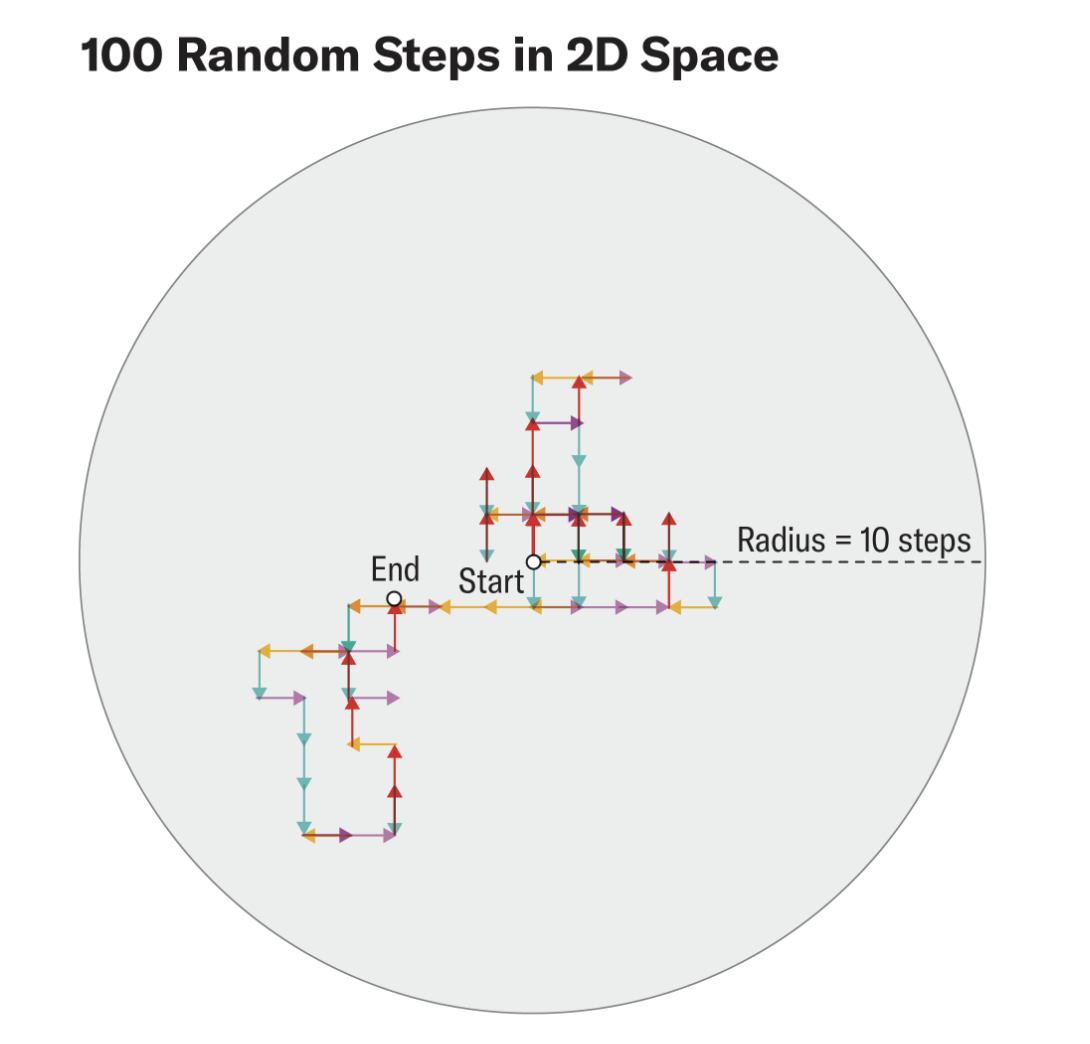
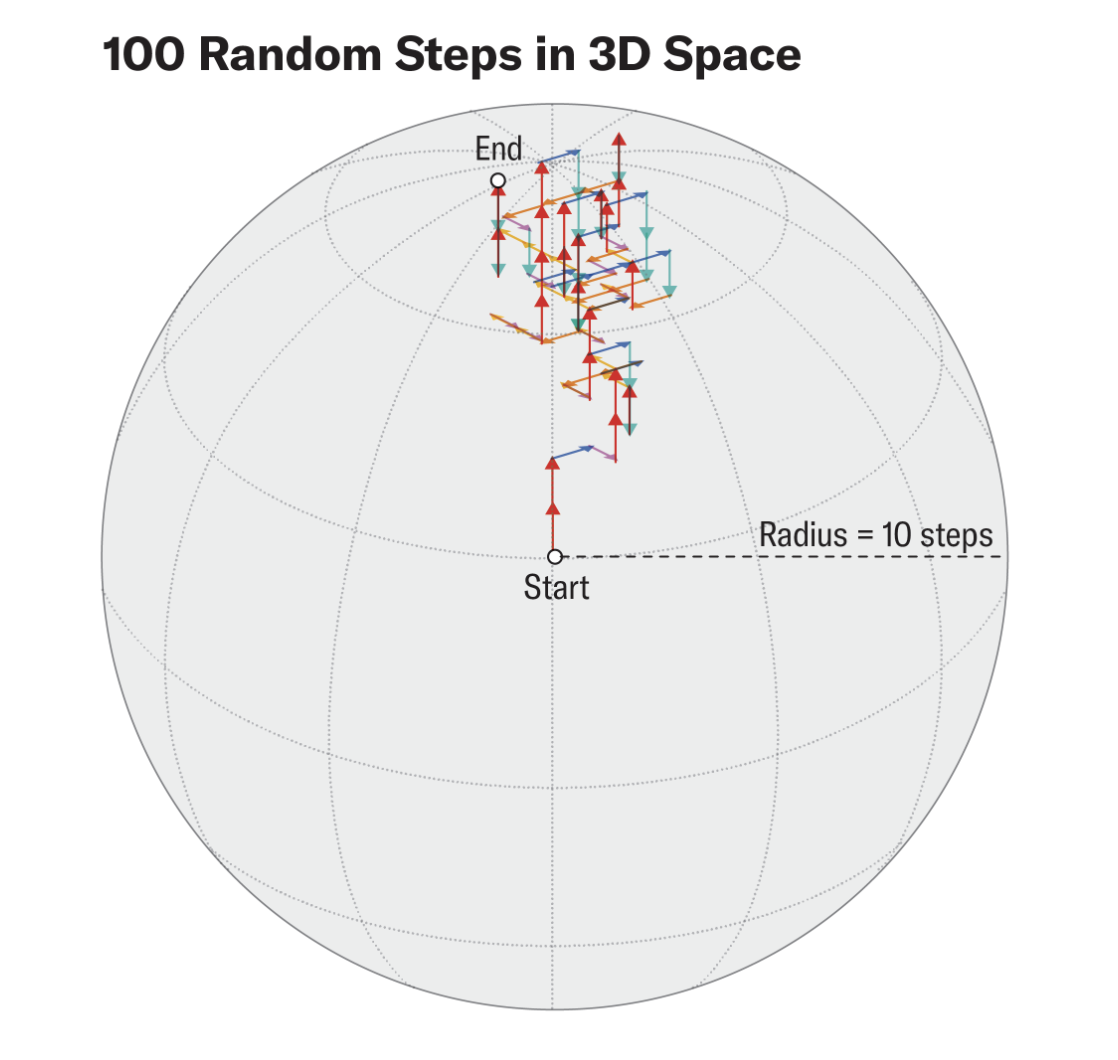
What the experts (and me) say: Something I loved about the film was how it rejects an overly romantic portrayal of being an astronaut. It's fun to watch Ryan Gosling bump into stuff, fall flat on his face, and get food everywhere in zero g, but it reveals a grain of truth that astronauts know well. "It's very unglamorous," says Drew Feustel, a former NASA astronaut, of space travel. "That's the reality of it." | | More than 100 years ago, Hungarian mathematician George Pólya kept bumping into a colleague on a walk outside Zurich in Switzerland, where he worked. The embarrassment led him to calculate the likelihood that someone walking in a random path would return to the same place. This answer is equivalent to the probability that two walkers who start at the same location will ever meet again. Pólya's calculations showed that on a two-dimensional surface (such as a forest floor), a random walker will always return to their starting point—but in a three-dimensional space, that person is more likely to never return to the starting point. | | After 100 steps (t = 100), the size of the region where the walk is most likely to reside (a circle of radius Vt = 10) contains hundreds of points (on the order of t). Because the number of steps taken is on a par with the size of this region, the walk visits a decent portion of the circle. | | After 100 steps (t = 100), the size of the region where the walk is most likely to reside (a sphere of radius vt = 10) contains thousands of points
(on the order of t1.5). Because the number of steps taken is significantly smaller than the size of this region, the walk visits only a small portion of the sphere. The difference in coverage between walks in two- and three-dimensional space gets more dramatic as t grows. | | On Monday, I asked Today in Science readers what they're doing, if anything, to reduce their plastic consumption. Thank you for all your responses! Here are a few: I carry bamboo cutlery in my purse if there's any chance of buying street food or take out. —Paula T. I don't put leftovers in plastic containers—have bought glass containers for that. Increasingly, I'm only buying clothes made of natural fibers. —CJ I have replaced my coffee maker with an all stainless steel French press. —Mora D. I've migrated to using mason jars to store about everything in house. It helps that I can food for the year so I have plenty of sizes on hand. —Janna G. | | | | |
How well did you read Scientific American this week? Test your knowledge with today's science quiz. Also, check out today's Spellements. If you spot any missing science terms from the puzzle, email them to games@sciam.com. This week, readers found naphtha and radiolaria. | | MOST POPULAR STORIES OF THE WEEK | | - A 100-year-old theory might explain what's wrong with quantum mechanics | 6 min read
- Mathematicians find one pi formula to rule them all | 5 min read
- New ways to save kidneys | 2 min read
| | Please send any ideas, comments or feedback on this newsletter to: newsletters@sciam.com. Have a great weekend! —Emma Gometz, Newsletter Editor
| | | | |
Subscribe to this and all of our newsletters here. | | | | |