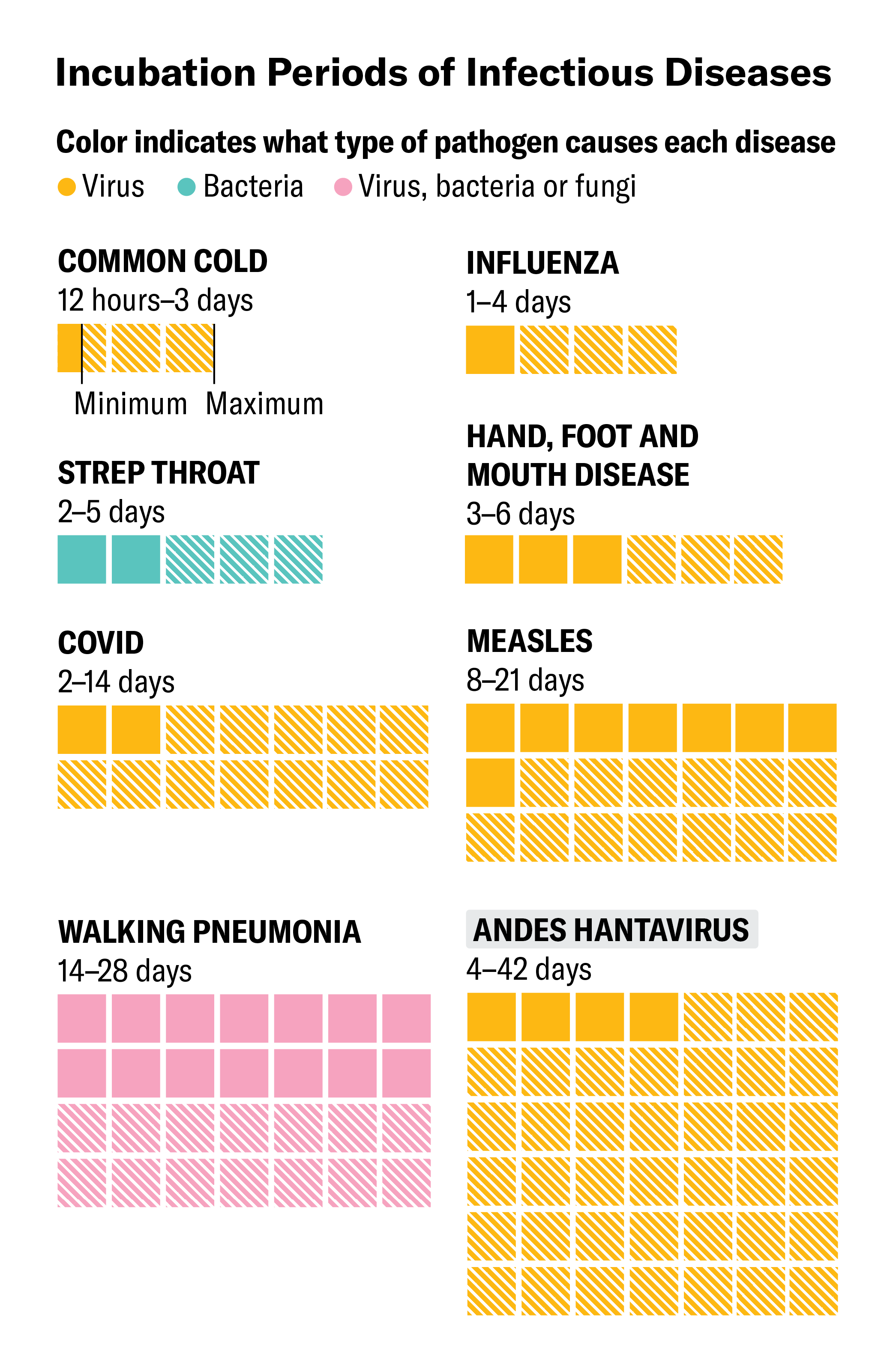
People infected with the Andes strain of the hantavirus may not develop symptoms for up to 42 days ͏ ͏ ͏ ͏ ͏ ͏ ͏ ͏ ͏ ͏ ͏ ͏ ͏ ͏ ͏ ͏ ͏ ͏ ͏ ͏ ͏ ͏ ͏ ͏ ͏ ͏ ͏ ͏ ͏ ͏ ͏ ͏ ͏ ͏ ͏ ͏ ͏ ͏ ͏ ͏ ͏ ͏ ͏ ͏ ͏ ͏ ͏ ͏ ͏ ͏ ͏ ͏ ͏ ͏ ͏ ͏ ͏ ͏ ͏ ͏ ͏ ͏ ͏ ͏ ͏ ͏ ͏ ͏ ͏ ͏ ͏ ͏ ͏ ͏ ͏ ͏ ͏ ͏ ͏ ͏ ͏ ͏ ͏ ͏ ͏ ͏ ͏ ͏ ͏ ͏ ͏ ͏ ͏ ͏ ͏ ͏ ͏ ͏ ͏ ͏ ͏ ͏ ͏ ͏ ͏ ͏ ͏ ͏ ͏ ͏ ͏ ͏ ͏ ͏ ͏ ͏ ͏ ͏ ͏ ͏ ͏ ͏ ͏ ͏ ͏ ͏ ͏ ͏ ͏ ͏ ͏ ͏ ͏ ͏ ͏ ͏ ͏ ͏ ͏ ͏ ͏ ͏ ͏ ͏ ͏ ͏ ͏ ͏ ͏ ͏
May 13, 2026—People infected with the Andes strain of hantavirus may not show symptoms for more than a month. Plus, researchers spot a galaxy with some of the universe's youngest stars. And make no mistake, chatbots do not think like humans. Let's go.
—Andrea Gawrylewski
Chief Newsletter Editor
|
|
Galaxy cluster MACS J0416.1-2403 (MACS0416) magnifies the light from more distant background galaxies through gravitational lensing. NASA/ESA/CSA/STScI/J. Diego/Instituto de Física de Cantabria/J. D’Silva/University of Western Australia/A. Koekemoer/STScI/J. Summers/Arizona State University/R. Windhorst/Arizona State University/H. Yan/University of Missouri
|
|
Several U.S. passengers onboard the cruise ship at the center of a deadly hantavirus outbreak are back in the country and under medical watch. They will quarantine for 42 days—many of them at a special facility—while they are monitored for signs of infection. Why so long? The Andes virus, the type of hantavirus involved in the outbreak, has a much longer incubation period than other viruses—a range of four to 42 days, with most people showing symptoms around the second to fourth week after exposure.
Why this matters: Longer incubation periods can reduce pathogens’ ability to spread quickly from person to person, which typically gives public health officials the upper hand in identifying contacts and monitoring them to control outbreaks. But it can complicate other containment processes. You can fly to the opposite side of the world in a matter of two days, potentially spreading diseases with long incubation periods that you weren't aware you contracted.
How it works: Andes virus quietly circulates in the bloodstream from the initial site of infection. Eventually it infiltrates endothelial cells lining blood vessels throughout the body but primarily in the lungs. The virus replicates there without immediately killing cells and triggering an immune response. Over time, infection and delayed immune activity cause inflammation and fluid to build up in the lungs, making it hard to breathe. One study last year found the virus in blood, as well as in saliva and another fluid in the mouth, even in the final stage of infection. Whether hantavirus spreads through the air or by other means is an open question.
|
|
Amanda Montañez; Source: Cleveland Clinic, U.S. Centers for Disease Control and Prevention (data)
|
|
In a recent experiment, scientists had humans and AI bots evaluate the credibility of several news sources. While humans evaluated their own knowledge of the facts, the source, and the language they were presented with, AI chatbots' conclusions consistently reflected patterns drawn from language (such as how often a particular combination of words coincided and in what contexts)—it didn’t source references to relevant facts or refer to its own previous experiences.
Why this matters: While AI can reproduce results that look similar to humans’ conclusions, its method of evaluation is still quite different from how humans think. Chatbots generate answers to users’ questions by reproducing existent patterns in language, not by independently evaluating the facts. To the observer, an AI chatbot may sound like it’s evaluating, but they are fundamentally incapable of judgement, says Walter Quattrociocchi, a computer scientist at the Sapienza University of Rome. This is an important distinction for those using chatbots to help them judge difficult situations.
What the experts say: “People are already using these systems in contexts in which it is necessary to distinguish between plausibility and truth, such as law, medicine and psychology. A model can generate a paragraph that sounds like a diagnosis, a legal analysis or a moral argument. But sound is not substance. The simulation is not the thing simulated,” Quattrociocchi says. —Emma Gometz, newsletter editor
|
|
|
|
|
|
SPONSORED CONTENT BY SCIENTIFIC AMERICAN TRAVEL
|
|
Limited Space on Trip of a Lifetime
|
|
Only a few cabins left for our 2026 solar eclipse cruise! Reserve yours while you can for an extraordinary experience: watching totality approach while surrounded by the sea, fellow science lovers and your trip leader, space and physics editor Clara Moskowitz.
|
|
|
|
|
- One family is behind $65 million in stolen antiquities discovered in art museums around the world. | The Atlantic
- Alcohol is fueling an unrecognized epidemic in the U.S., an investigation finds. | STAT
- Struggling gig-workers in Hollywood don't wait tables anymore for cash. They train AI programs. | WIRED
|
|
What questions do you have about hantavirus? Reply to this email or use the address below to send them to me and I'll publish answers in an upcoming newsletter. Personally, I'm curious about how many other diseases like this are waiting in the wings, and the likelihood of them popping up in the coming years. Which are the infections we most need to be keeping an eye on?
|
|
—Andrea Gawrylewski, Chief Newsletter Editor
|
|
|
|
|
Subscribe to this and all of our newsletters here.
|
|
|
|
|