Tuesday, March 1, 2022

This Month in the Archives

Trouble viewing? View in your browser.
View all Scientific American publications.
Scientific American

Dear Reader,

February feels like the longest month because of the cold and dark doldrums in the Northern Hemisphere. Artificial cold has changed the way we farm, transport food, shop, cook and eat. This month we highlight articles from our archives about winter snow and the refrigerator. And we look at the history and uses of hydrogen, the most abundant element in the universe. Please let us know if there are subjects you'd like to hear more about in future archive newsletters at editors@sciam.com


Editor headshot

We hope you enjoy the journey.
Laura Helmuth
, Editor in Chief

World-Changing Appliance: The Refrigerator

Commerical Refrigerator

A commercial refrigerator unit from August 1873 suggests why the “ice-box” was not replaced in private homes until the 1930s.

August 1873:

In the 19th century natural (from stored ice) and artificial cold kept food fresher for longer during shipping and storage from farm to home.

November 1929:

The “ice-box” was superseded by “hermetically sealed” electric refrigerators. But their refrigerants were highly toxic and leaks could be lethal.

January 1997:

Albert Einstein (yes, that Einstein) and Leo Szilard invented new varieties of home refrigerators after hearing about lethally toxic refrigerant leaks.

Let it Snow

Snow Challenges

Snow challenges the function of cities. Old and new methods to get rid of the stuff work side-by-side in this cover image from December 1916.

March 1884:

“Snow shoes" what we call skis now, seem entirely unfamiliar to the American reader in this short article—but it looks fun.

December 1916:

Snow is a problem to be fought and conquered in a big city.

January 1973:

The infinitely variable, ephemeral, six-sided snow crystal has fascinated scientists and kids alike for centuries.


Magazine covers

Access 177 Years of Scientific Knowledge

Learn More

Hydrogen

Hydrogen gas lifts artillery

Hydrogen gas lifts artillery spotting balloons near the front lines in France in the First World War (August 1915).

August 1915:

The chemist as soldier: hydrogen gas was produced and delivered for use in artillery observation balloons during the First World War.

February 1980:

Storing atoms of an odorless, colorless, explosive gas is a challenge. Maybe they can be stuffed into the gaps in metal atoms.

July 2006

Here’s an ambitious idea: store and transport electricity and hydrogen in the same nationwide grid of supercooled conduits.

Current Issue: March 2022
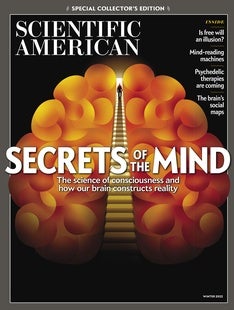
February Issue: Reality Check

Check out the latest issue of Scientific American

Read the issue

For more highlights from the archives, you can read March's 50, 100 & 150 Years Ago column.


Questions?   Comments?

Send Us Your Feedback
Download the Scientific American App
Download on the App Store
Download on Google Play

To view this email as a web page, go here.

You received this email because you opted-in to receive email from Scientific American.

To ensure delivery please add news@email.scientificamerican.com to your address book.

Unsubscribe    Email Preferences    Privacy Policy    Contact Us

New Studies Support Wuhan Market as Pandemic's Origin Point

Trouble viewing? View in your browser.
View all Scientific American publications.
    
February 28, 2022

Epidemiology

New Studies Support Wuhan Market as Pandemic's Origin Point

Report authors say that the coronavirus SARS-CoV-2 jumped from animals sold at the market into people twice in late 2019—but some scientists want more definitive evidence

By Amy Maxmen,Nature magazine

Climate Change

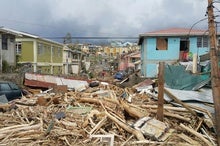
With 'Limited Amount of Time Left,' New IPCC Report Urges Climate Adaptation

Human and natural systems are already buckling under the influence of global warming, write the authors of a landmark report

By Chelsea Harvey,Sara Schonhardt,E&E News

Epidemiology

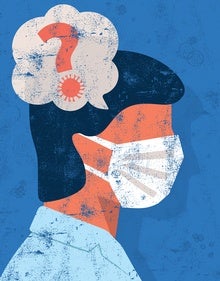
What Is a Vaccinated Person's Risk of Dying from COVID?

Vaccination definitely lowers the odds, but the exact answer is hard to find

By Lisa Miller,The Conversation US

Anthropology

Ancient Peoples Teach Us That We Can Create a Better World

A radical retelling of civilization's origins leads to an expansive vision of human possibility

By John Horgan

Neuroscience

Researchers Make a Phantom Sixth Finger Grow and Shrink

An unsettling illusion points to both philosophy and robotics

By Matthew Hutson

Renewable Energy

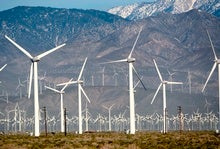
Three Fixes to Build Energy Projects Cleaner and Faster

Modernize the way we regulate clean energy construction to reach net-zero carbon emission goals

By Rich Powell

Health Care

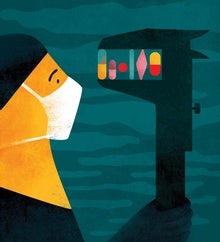
A Faster Way to Find Good Medical Treatments Is Gaining Ground

A type of clinical trial that tests many therapies at once is being used for COVID and Alzheimer's

By Claudia Wallis

Creativity

Cowboy Culture Doesn't Have a Monopoly on Innovation

Despite stereotypes that suggest self-reliant values lead to the most innovations, group-centered societies have just as much creativity

By Thomas Talhelm

Climate Change

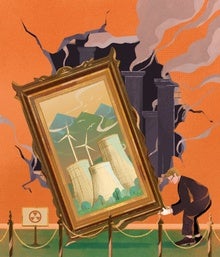
New Nuclear Power Plants Are Unlikely to Stop the Climate Crisis

These plants take too long to build and bring online, and we don't have that much time

By Naomi Oreskes

Arts

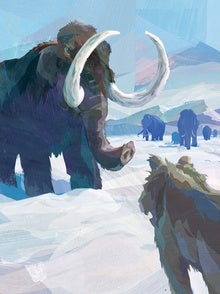
A Reverse Journey through Geologic Time, a Tale of Wild Horses and Interspecies Kinship, and More

Recommendations from the editors of Scientific American

By Amy Brady
FROM THE STORE

ADVERTISEMENT

FROM THE ARCHIVE

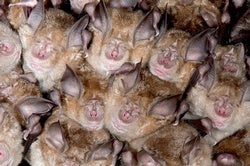
Closest Known Relatives of Virus Behind COVID-19 Found in Laos

Studies of bats in China and Laos show southeast Asia is a hotspot for potentially dangerous viruses similar to SARS-CoV-2

LATEST ISSUES

Questions?   Comments?

Send Us Your Feedback
Download the Scientific American App
Download on the App Store
Download on Google Play

To view this email as a web page, go here.

You received this email because you opted-in to receive email from Scientific American.

To ensure delivery please add news@email.scientificamerican.com to your address book.

Unsubscribe     Manage Email Preferences     Privacy Policy     Contact Us

We Are Out of This World…With the Next Box!

For a Limited Time Only, Get a Bonus Gift with Space & Beyond Box!
THE SOLAR SYSTEM COLLECTION
Featured Product: PLUTO GLOBE Explore Pluto with this EXCLUSIVE detailed 6-inch desktop globe created with imagery from the New Horizons spacecraft’s flyby in July 2015!
Check out the exclusive Pluto globe and 6 other unique products, including 4 MORE EXCLUSIVES  in the Solar System Collection! Plus get a bonus gift...
 SEE WHAT'S INSIDE
Get Free Campo Del Cielo Meteorite, A $25 Value, Yours Free with your box subscription...

FREE: CAMPO DEL CIELO METEORITE
from Astronomy magazine

Recovered beginning in 1576 in northern Argentina, the Campo del Cielo iron-nickel meteorite is estimated to have fallen about 4,500 years ago. Each authentic meteorite has an average weight of 4 grams and comes enclosed in a protective black frame with a display base and Certificate of Authenticity.

 SUBSCRIBE
+ GET FREE GIFT
connect on socialmedia with #BeyondtheBox facebookinstagrampinterest

Offer valid for new Space & Beyond Box subscriptions only. While supplies last. Bonus gift will ship separately from the first Space & Beyond Box.

Unsubscribe  •  Preferences  •  Customer Service  •  Privacy Policy  •  View In Browser

This message was sent to ceo.studentlike.spuniv@blogger.com.

© 2022 Kalmbach Media Co. 21027 Crossroads Circle Waukesha, WI 53186

P40079

Scientist Pankaj

Why this year's El Niño is so alarming

Plus, OpenAI ‘shepherds’ affirm its blockbuster physics result ͏  ͏  ͏  ͏  ͏  ͏  ͏  ͏  ͏  ͏  ͏  ͏  ͏  ͏  ͏  ͏  ͏  ͏  ͏  ͏  ͏  ͏  ͏  ͏  ͏  ͏ ...